
Course: Implementing Proxmox Virtual Environment
Course: Implementing Proxmox Virtual Environment (Install, Configure, Manage)
ระยะเวลา: 3 วัน (18 ชม.) 9.00 - 16.00 น.
ราคาอบรม ต่อ ท่าน (Public Training) : 12,000 บาท (online) / 14,000 บาท (onsite)
กรณีเป็น In-house Training จะคำนวณราคาตามเงื่อนไขของงานอบรม
*ราคาดังกล่าวยังไม่รวมภาษีมูลค่าเพิ่ม*
Public Training หมายถึง การอบรมให้กับบุคคล/บริษัท ทั่วไป ที่มีความสนใจอบรมในวิชาเดียวกัน โดยจะมี 2 แบบ
1. อบรมแบบ Online โดย Live ผ่านโปรแกรม Zoom พร้อมทำ Workshop ร่วมกันกับวิทยากร
2. อบรมแบบ Onsite ณ ห้องอบรม ที่บริษัทจัดเตรียมไว้ พร้อมทำ Workshop ร่วมกันกับวิทยากร
หมายเหตุ: - ผู้อบรมต้องนำเครื่องส่วนตัวมาใช้อบรมด้วยตัวเอง(spec RAM: 32 GB with SSD Storage)
- วันอบรมที่ชัดเจนทางบริษัทจะแจ้งภายหลัง ตามเดือนที่ผู้อบรมแจ้งความประสงค์ไว้ (ทางบริษัทขอสงวนสิทธิ์การปรับเปลี่ยน ตามความเหมาะสม)
In-house Training หมายถึง การอบรมให้กับบริษัทของลูกค้าโดยตรง โดยใช้สถานที่ของลูกค้าที่จัดเตรียมไว้ หรือจะเป็นแบบ Online ก็ได้เช่นกัน และลูกค้าสามารถเลือกวันอบรมได้
ลงทะเบียนอบรมได้ที่
เน้นการทำ Workshop ที่ถูกออกแบบมาอย่างดีเยี่ยม, สนุกสนาน, ครบครัน เพื่อช่วยในการเรียนรู้และทำให้เกิดความเข้าใจได้อย่างง่ายดายที่สุด
#พร้อมLabSnapshot #ทุกขั้นตอน
(ลิขสิทธิ์ snapshot โดย อ.สุรัตน์ เกษมบุญศิริ)
เนื้อหาต่างๆ มีการปรับเปลี่ยน/จัดหมวดหมู่ ใหม่ทั้งหมด เพื่อทำให้ง่ายต่อความเข้าใจ
การันตีครับ ว่า ผู้อบรมทุกคนที่จบจาก course นี้จะได้รับความรู้ทั้งภาคทฤษฏีและภาคปฏิบัติ อย่างครบถ้วน เพื่อนำไปใช้ในการทำงานจริง
📌 เริ่มปูพื้นฐาน skill set สำหรับผู้เริ่มต้นใช้งาน Proxmox VE และทำความเข้าใจแนวคิดของ Datacenter Virtualization และ Hypervisor
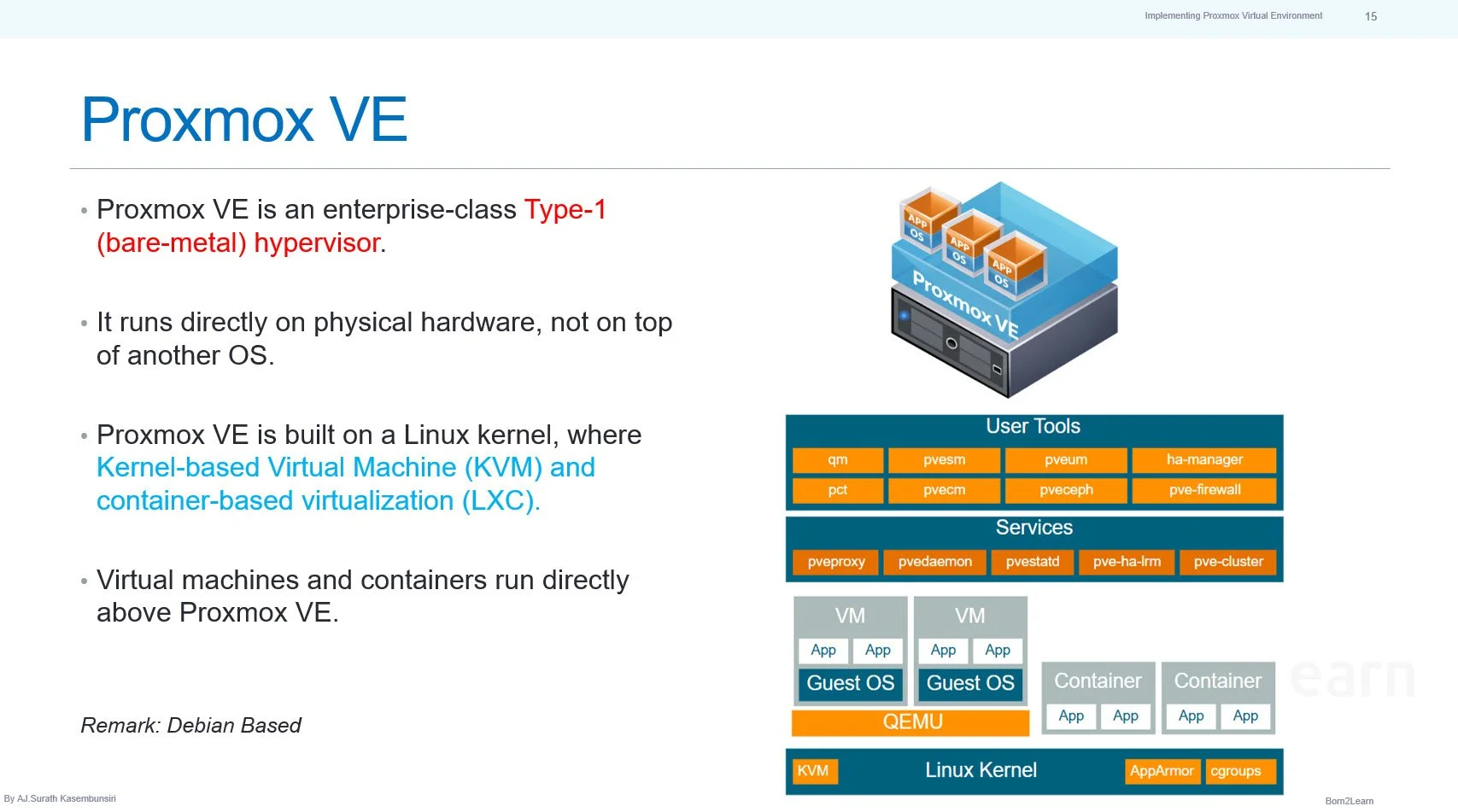
📌 เข้าใจภาพรวมองค์ประกอบต่างๆที่เกี่ยวข้องกับ Proxmox VE รวมถึง Architecture และบทบาทของระบบ Virtualization Infrastructure
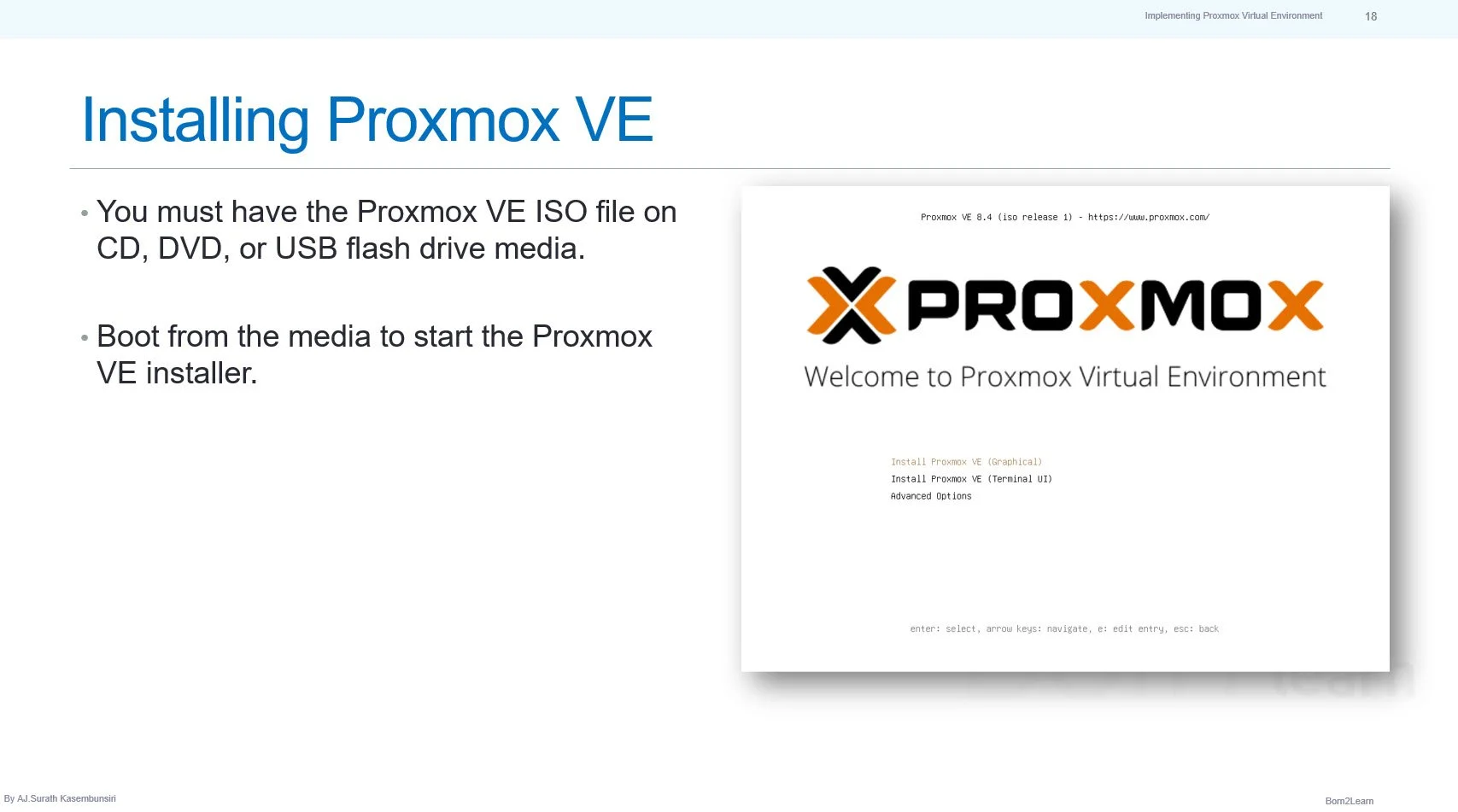
📌 เรียนรู้การออกแบบและติดตั้ง Proxmox VE ในรูปแบบต่างๆ พร้อมขั้นตอนการเตรียมระบบสำหรับใช้งานในองค์กร
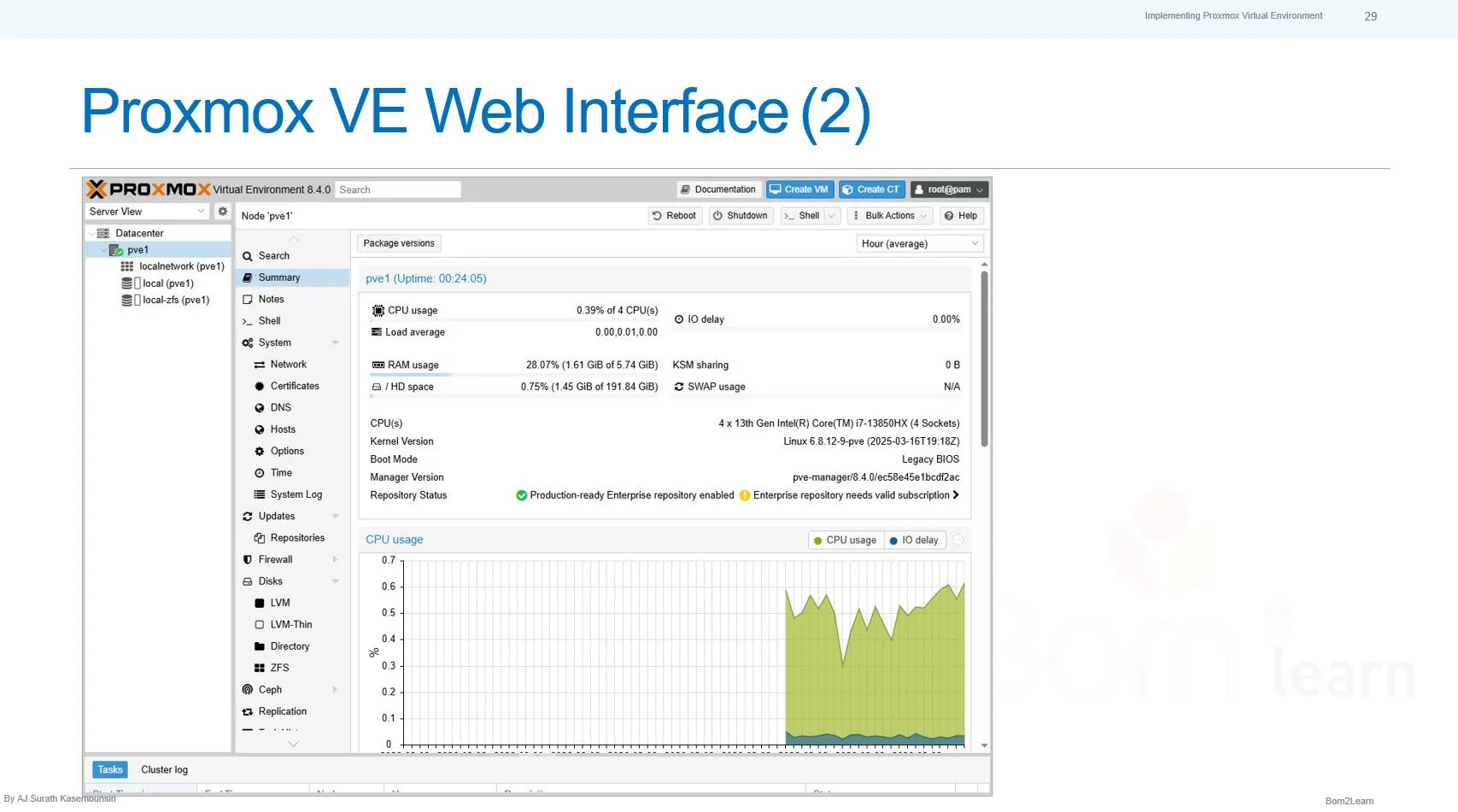
📌 เริ่มทำงานกับ Proxmox Web User Interface และทำความเข้าใจโครงสร้างการบริหารจัดการภายในระบบ
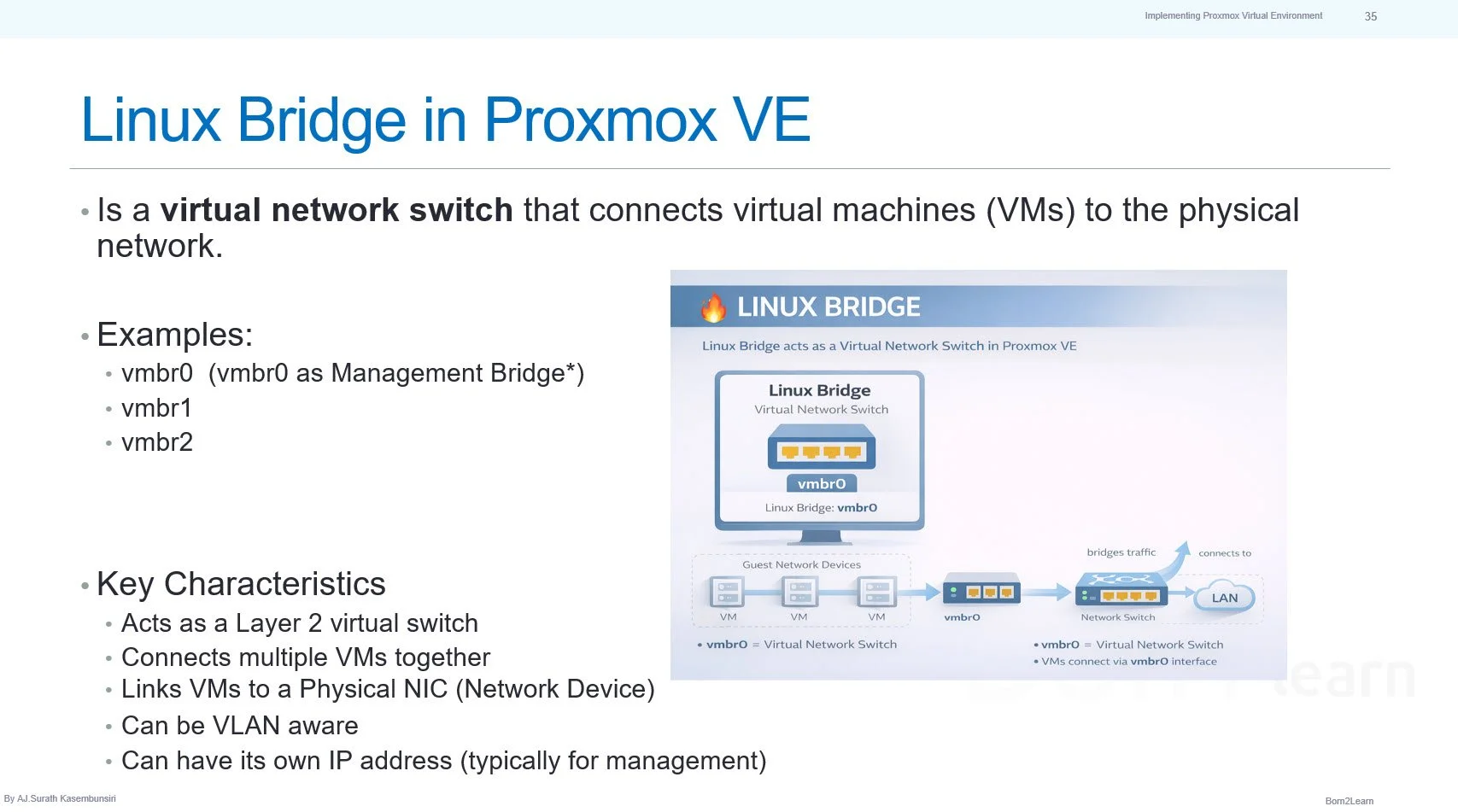
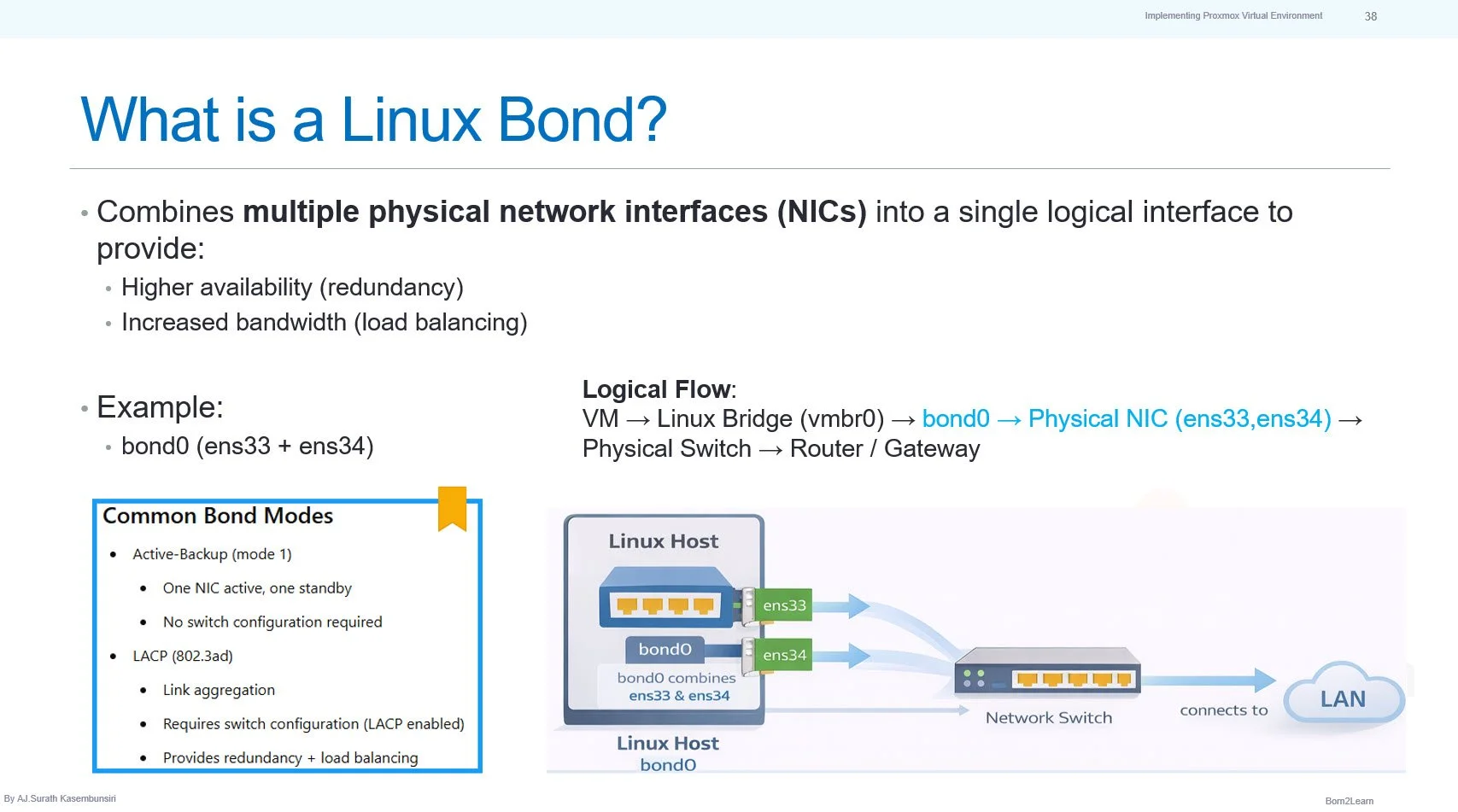
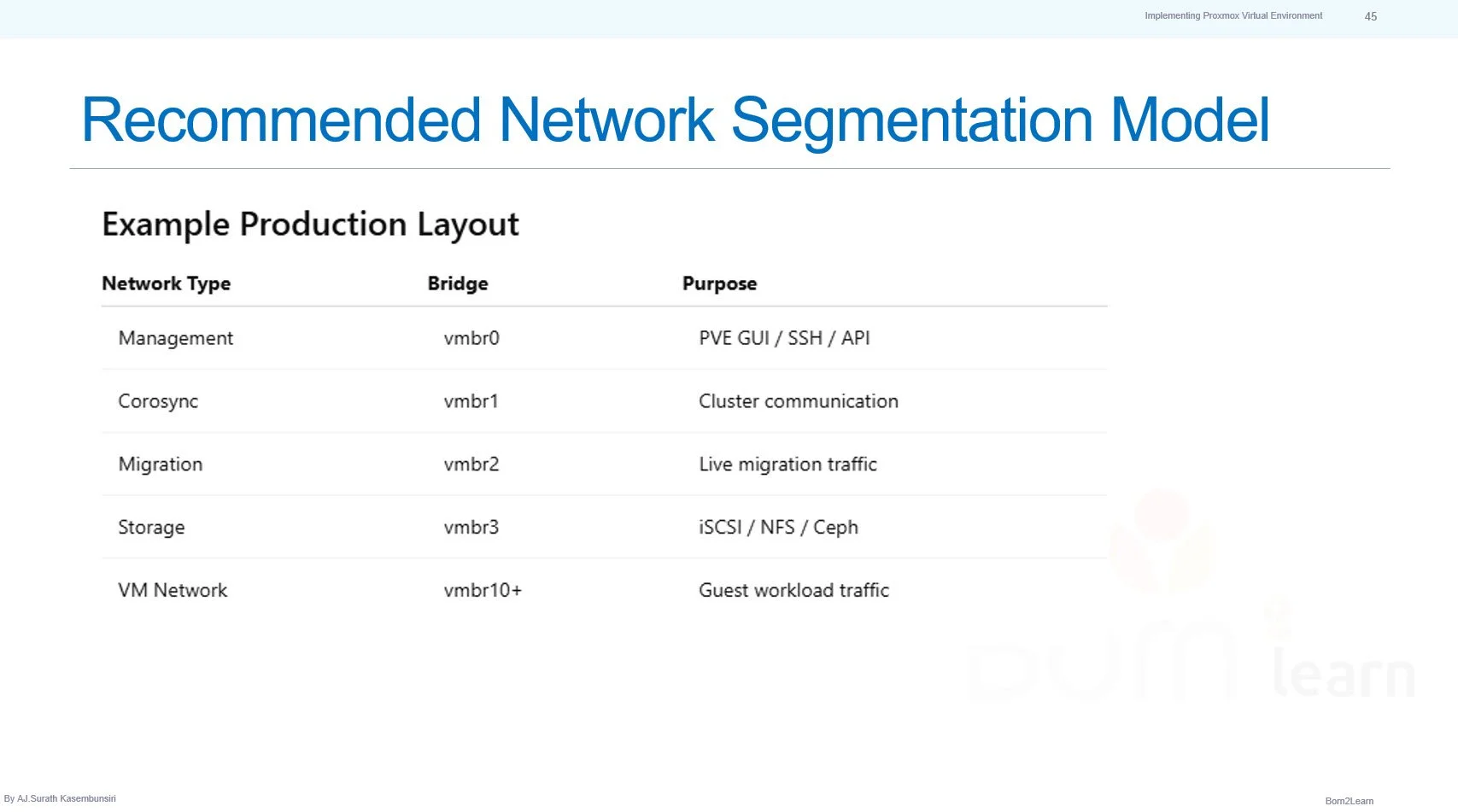
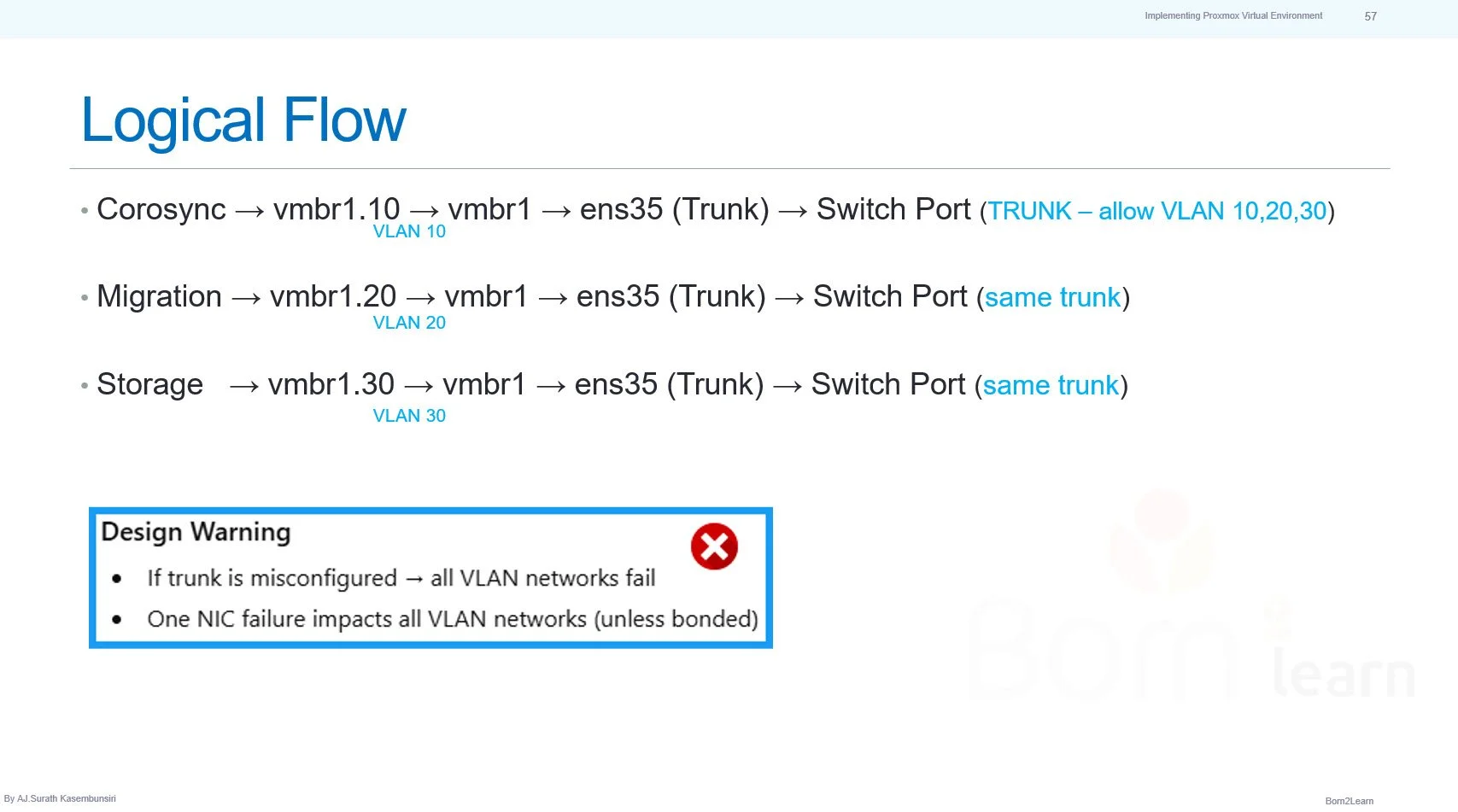
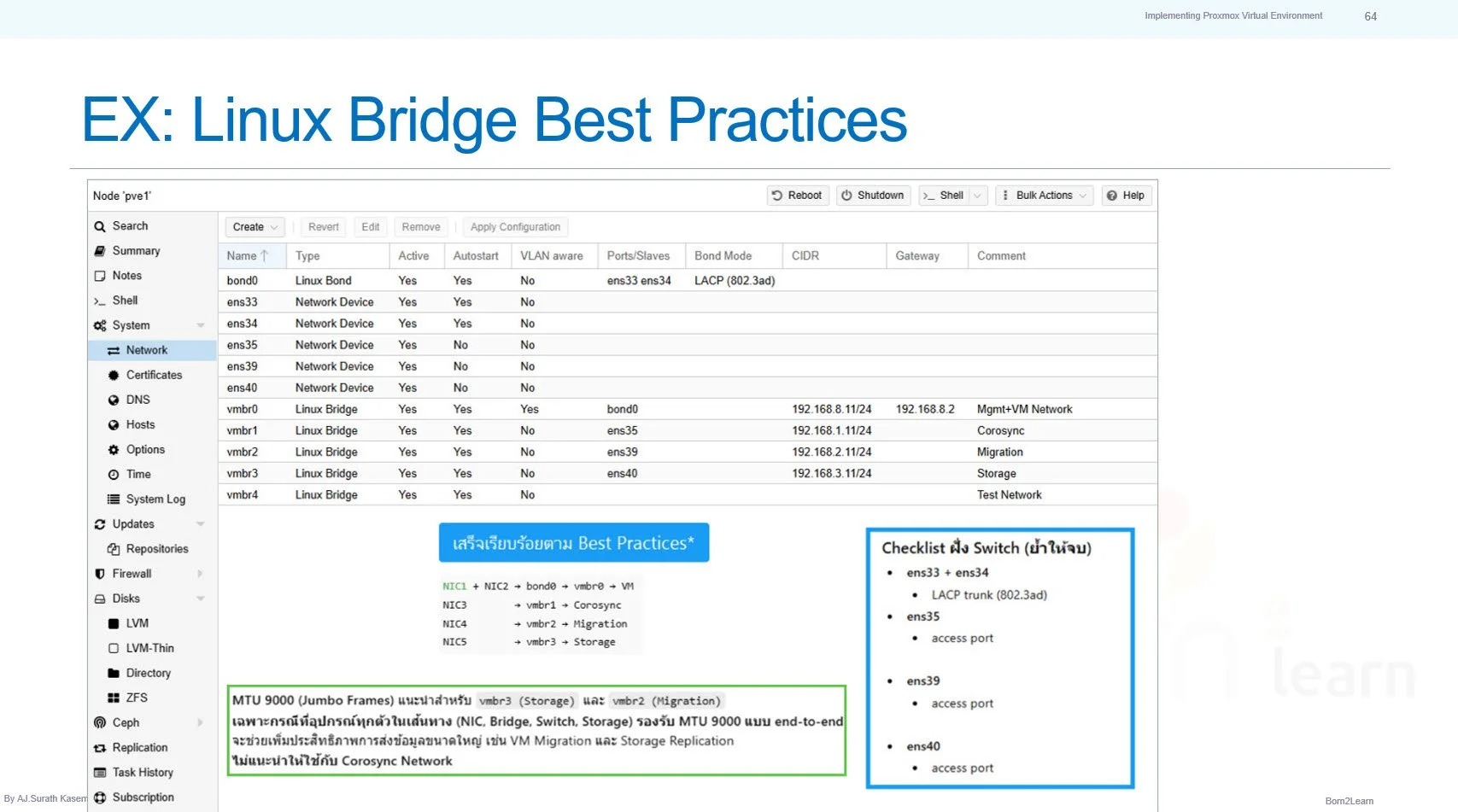
📌 เจาะลึกการทำงานของ Proxmox Networking รวมถึง Linux Bridge, Bonding, VLAN และการออกแบบ Multi-Bridge Architecture สำหรับระบบ Virtualization
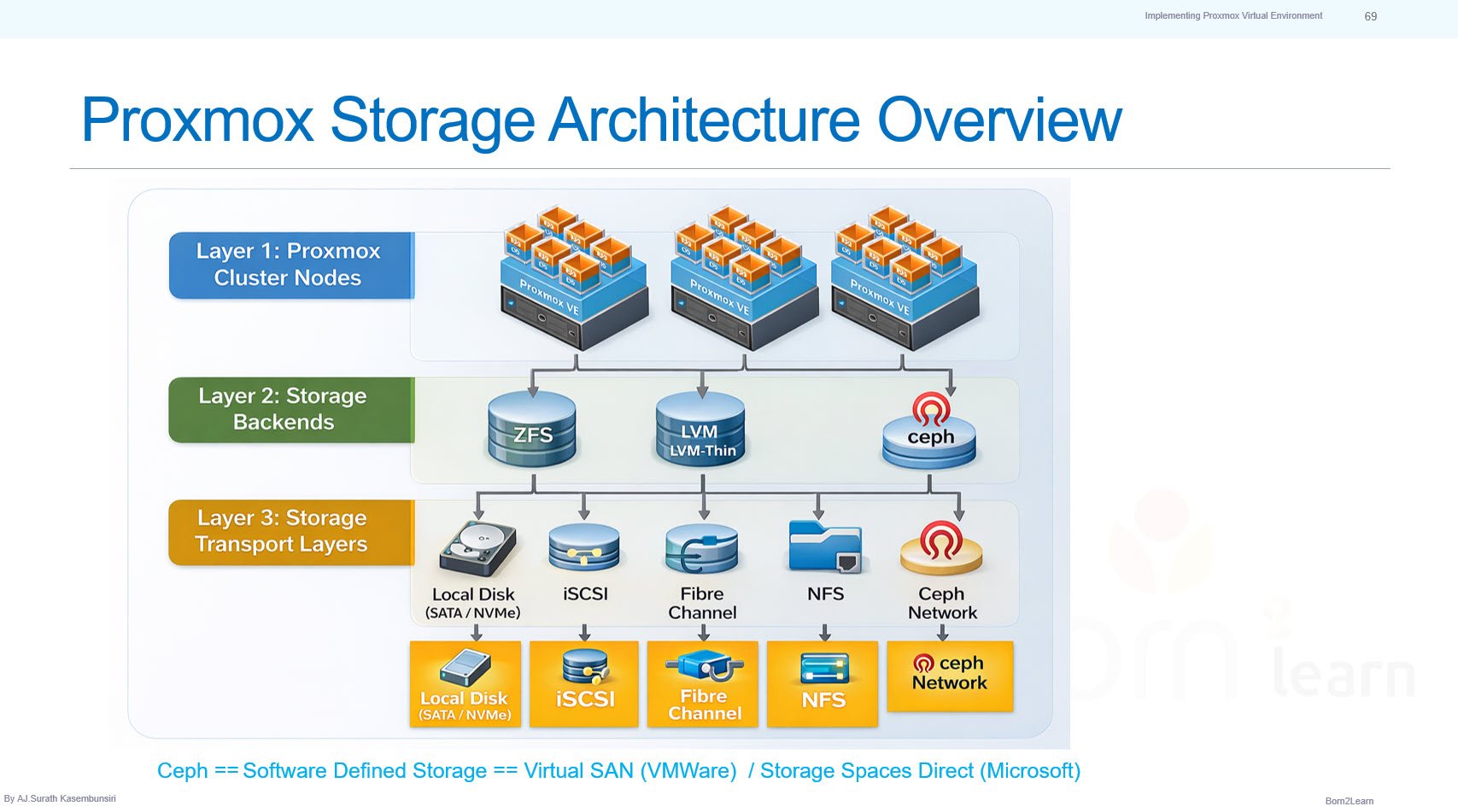
📌 ทำความรู้จักกับ Storage ในรูปแบบต่างๆ สำหรับระบบ Virtualization เช่น Local Storage, NAS, SAN และการเลือกใช้งานที่เหมาะสมกับ Workload
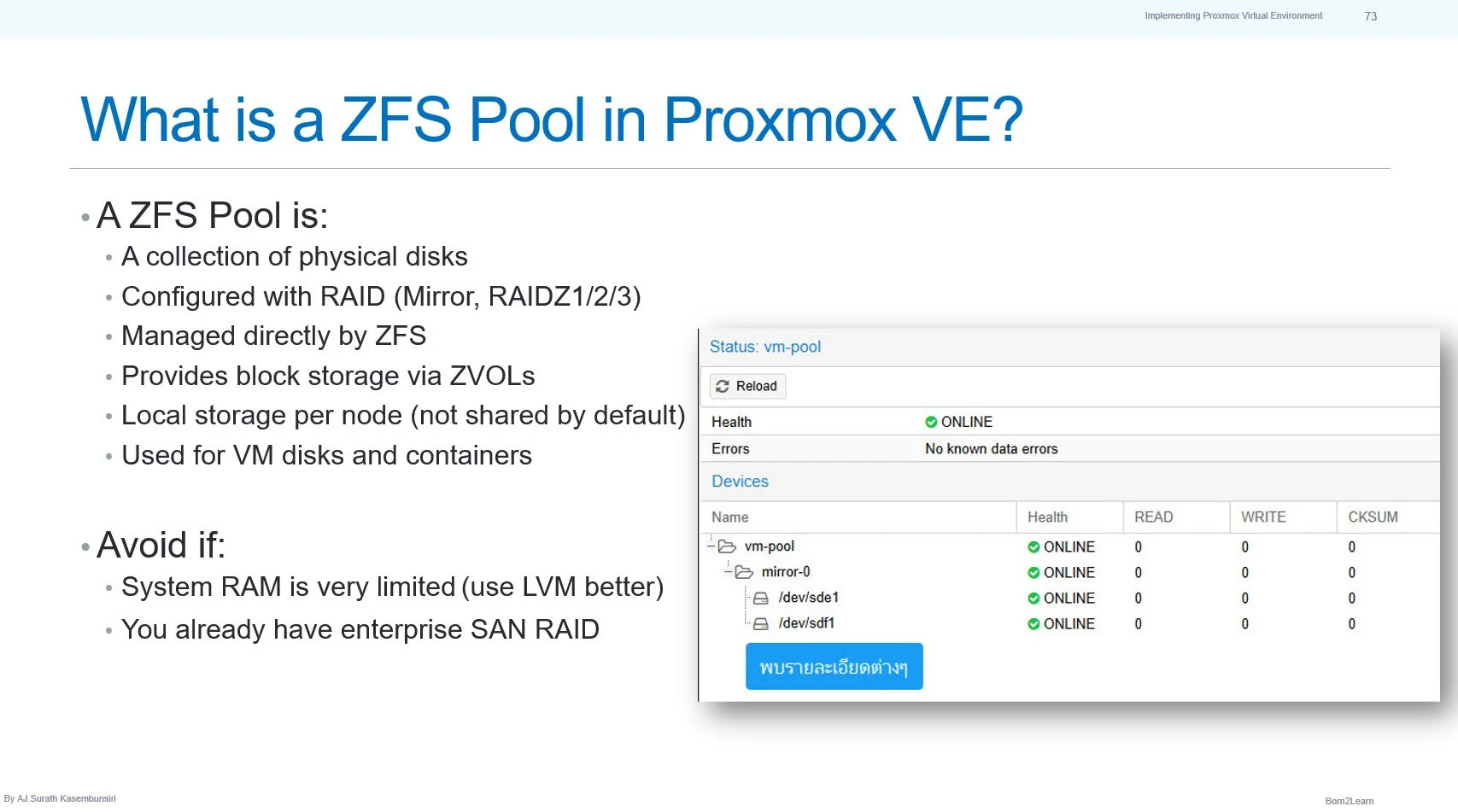
📌 เรียนรู้การใช้งานและการบริหารจัดการ Storage บน Proxmox VE รวมถึงเทคโนโลยี ZFS เช่น ARC Cache, Snapshot, Compression และ RAID Level
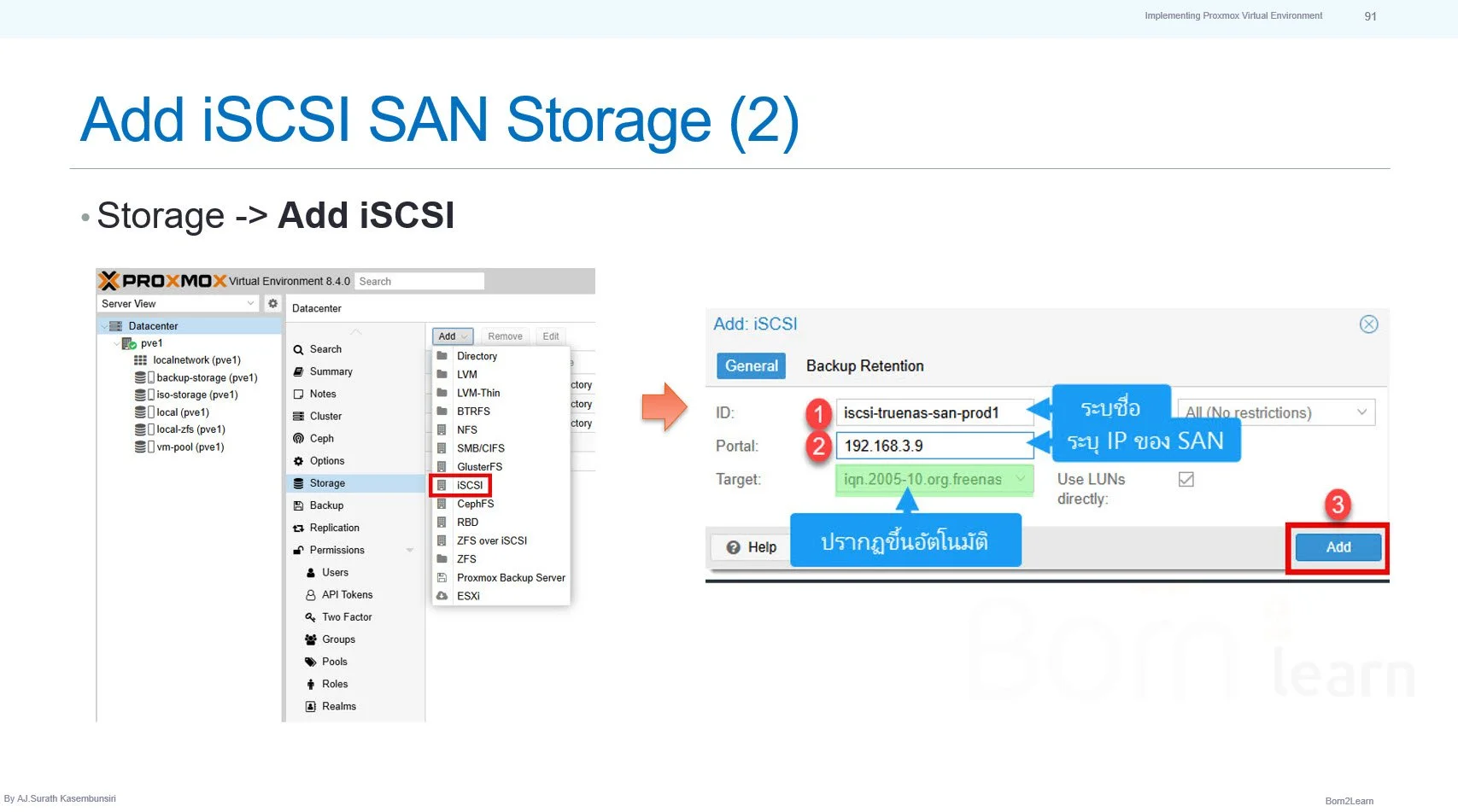
📌 สามารถเชื่อมต่อ Storage เข้ากับ Proxmox VE ได้อย่างถูกต้อง เช่น Directory Storage, ZFS Storage และ iSCSI SAN
📌 เรียนรู้แนวทางการบริหารจัดการ Virtual Machines (VMs) และ Linux Containers (LXC) อย่างมีประสิทธิภาพ รวมถึงการปรับแต่งทรัพยากรให้เหมาะสมกับการใช้งาน
📌 ทำความเข้าใจโครงสร้างภายในของ Virtual Machine เช่น VM Configuration File, Virtual Disk และ Virtual Hardware
📌 เรียนรู้การสร้าง VM Template และการ Clone เพื่อเพิ่มความรวดเร็วในการ Deploy ระบบในองค์กร
📌 รู้จักแนวทางการ Migrate Virtual Machines จาก VMware ไปสู่ระบบ Proxmox VE พร้อมข้อควรระวังและ Best Practices
📌 เรียนรู้การ Implement Proxmox Clustering เพื่อรวมหลาย Node ให้ทำงานเป็นระบบเดียวกัน
📌 ทำความเข้าใจการทำงานของ Live Migration และการย้าย VM ระหว่าง Node โดยไม่ต้องหยุดระบบ
📌 เรียนรู้การ Implement High Availability (HA) พร้อมแนวคิดสำคัญ เช่น Corosync, Quorum และการป้องกันปัญหา Split-Brain
📌 เรียนรู้การใช้งาน ZFS Replication เพื่อเพิ่มความสามารถด้าน Data Protection และ Disaster Recovery
📌 ทำความเข้าใจแนวทางการสำรองข้อมูล (Backup Strategy) บน Proxmox VE อย่างถูกต้อง
📌 เรียนรู้การใช้งาน Proxmox Backup Server (PBS) สำหรับการสำรองและกู้คืน Virtual Machines อย่างมีประสิทธิภาพ
📌 สามารถดำเนินการ Snapshot, Backup และ Restore ระบบ Virtual Machine และ Proxmox VE Host ได้อย่างถูกต้อง
📌 เรียนรู้ขั้นตอนต่างๆแบบ step-by-step พร้อม lab snapshot เพื่อให้สามารถนำกลับไปทบทวนและฝึกปฏิบัติได้ทุกที่ทุกเวลา
📌 Workshop และ Lab Practice ที่มีคุณภาพ ออกแบบเพื่อให้เข้าใจระบบ Virtualization ได้อย่างเป็นขั้นตอน โดย อ.สุรัตน์
📌 มาร่วมเรียนรู้การ Implement Proxmox Virtual Environment แบบมืออาชีพกับ Born2Learn

วิทยากร:
อ.สุรัตน์ เกษมบุญศิริ
ผู้เชี่ยวชาญและวิทยากรที่มีประสบการณ์มากกว่า 20 ปีในวงการ
พร้อมด้วยใบรับรองจากบริษัทระดับโลกมากมาย อาทิเช่น Microsoft, CompTIA, ITIL, Cisco และอื่นๆ
หลักการและเหตุผล:
This course provides the knowledge and skills to install, configure, manage, and maintain a Proxmox Virtual Environment (Proxmox VE) for virtualization infrastructure.
วัตถุประสงค์:
• Plan and install Proxmox VE in a virtualization environment.
• Understand the architecture, core components, and roles within Proxmox VE.
• Design and configure Proxmox VE in various deployment scenarios.
• Manage and operate the Proxmox Web User Interface effectively.
• Explore and configure Proxmox networking, including Linux Bridge, bonding, and VLAN architecture.
• Understand different types of storage and select suitable storage solutions for virtualization.
• Implement and manage storage within Proxmox VE, including ZFS storage and shared storage integration.
• Administer and optimize Virtual Machines (VMs) and Containers, including practical use cases.
• Learn the methods and best practices for migrating VMs from VMware to Proxmox VE.
• Implement Proxmox clustering and understand the concepts of quorum, corosync, and cluster architecture.
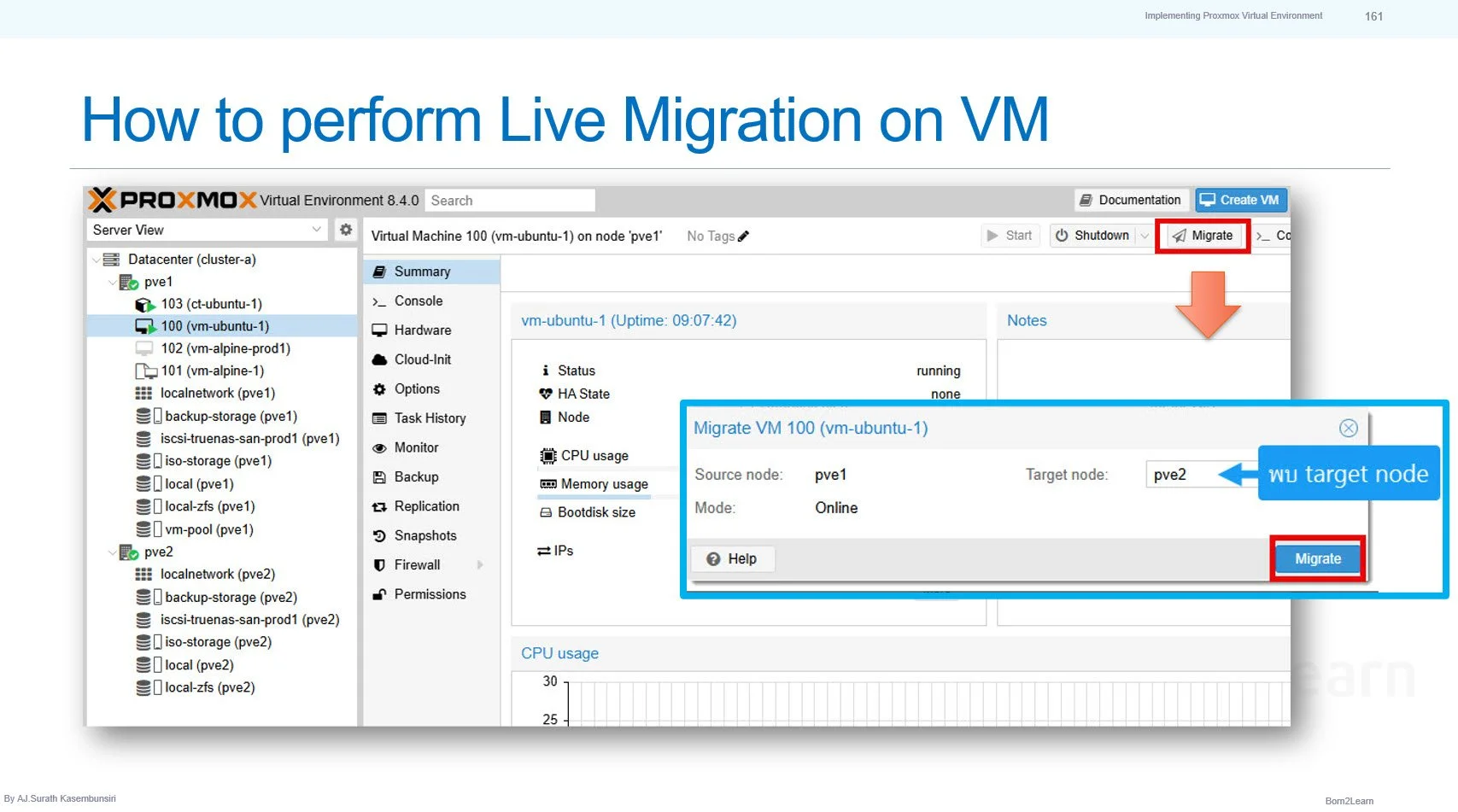
• Perform live migration of virtual machines between Proxmox nodes.
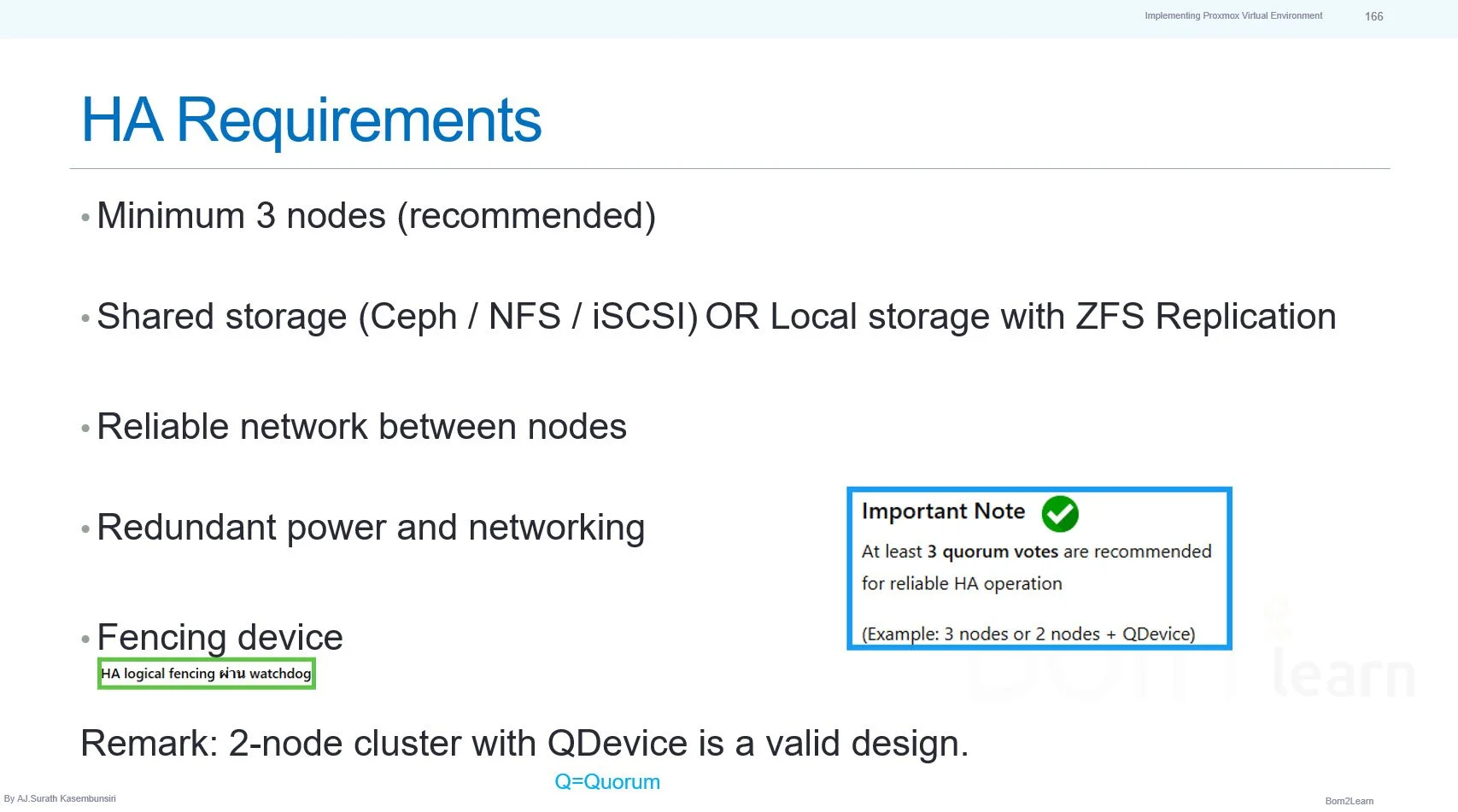
• Implement High Availability (HA) and understand failover mechanisms in Proxmox VE.
• Configure ZFS replication between Proxmox nodes for data protection.
• Implement backup strategies using Proxmox Backup Server (PBS).
• Perform snapshot, backup, and restore operations for virtual machines and Proxmox VE hosts.
หลักสูตรนี้เหมาะสำหรับ:
The primary audience for this course is individuals who administer, manage, or plan to deploy virtualization infrastructure using Proxmox Virtual Environment (Proxmox VE).
ความรู้พื้นฐาน:
· Basic knowledge of the Linux operating system and its core functionality.
· Basic understanding of networking concepts (e.g., IP, VLAN, routing).
· Basic knowledge of server hardware and virtualization principles.
เนื้อหาหลักสูตร:
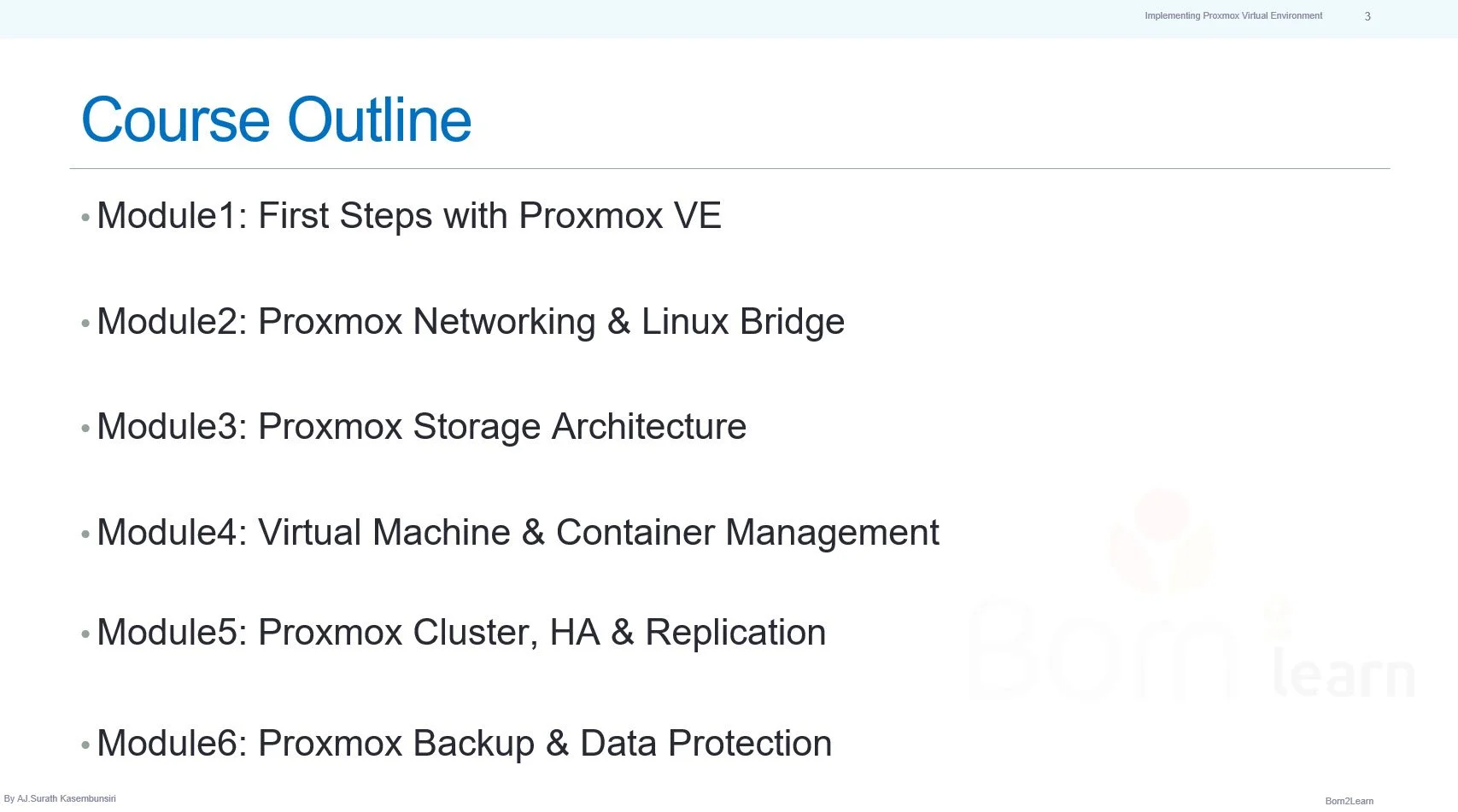
Module1: First Steps with Proxmox VE
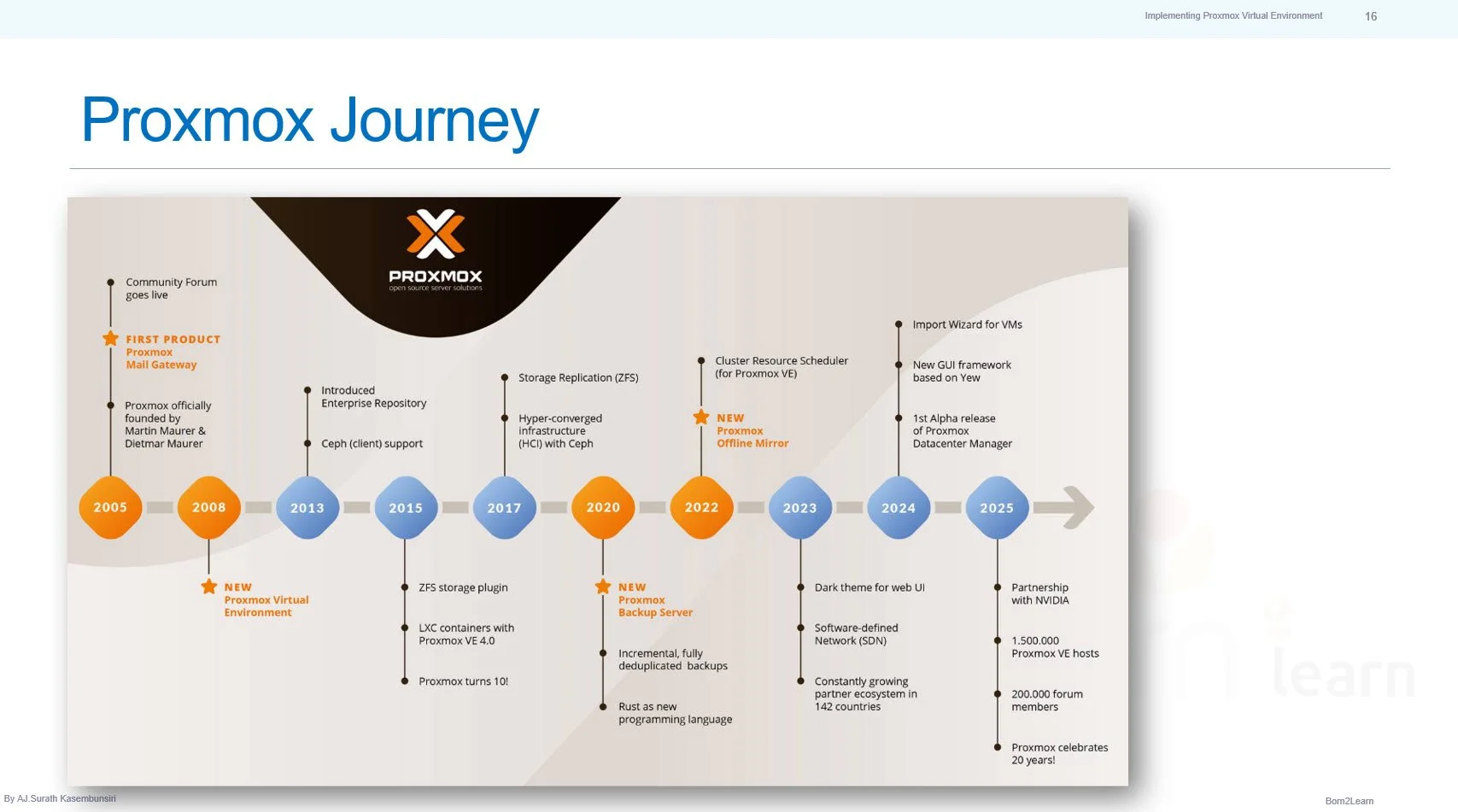
• Datacenter History and Definitions
• Hypervisor Concept
Type 1 vs Type 2 Hypervisor
KVM Architecture
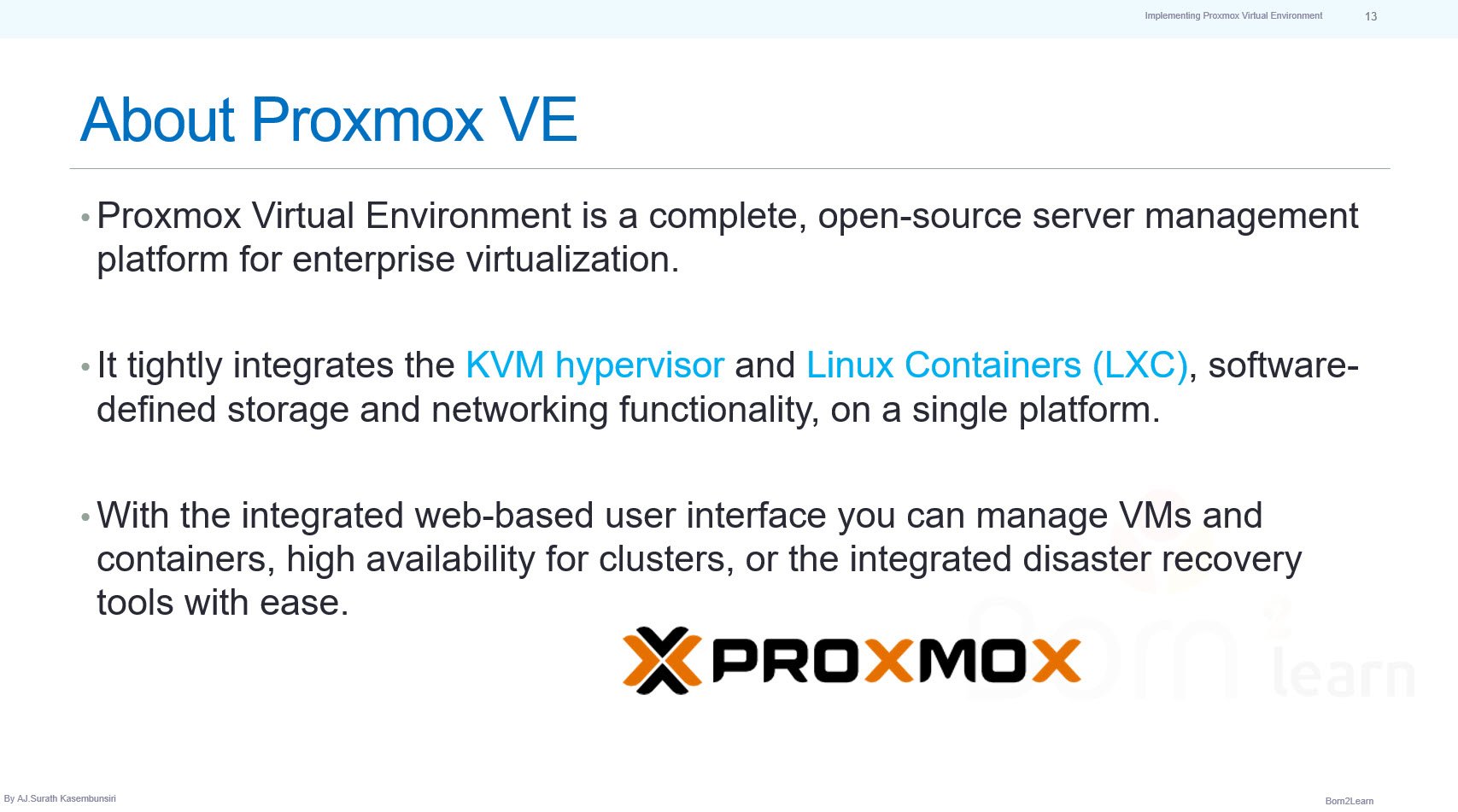
• Introduction to Proxmox Virtual Environment
• Installing Proxmox VE
• Proxmox Web Management Interface
Module2: Proxmox Networking & Linux Bridge
• Network Device vs Linux Bridge
• Creating Linux Bond
• Multi-Bridge Architecture
Management Network Design
Corosync Network Design
Live Migration Network
Storage Network Design
VM Network Design
• Multi-Bridge with Linux VLAN
• VLAN Aware
• Linux Bridge Best Practices
Module3: Proxmox Storage Architecture
• Overview of Proxmox VE Storage
• Proxmox VE Storage Feature Comparison
• Manage Local Disk with ZFS
• ZFS Technology
ZFS ARC Cache
ZFS Snapshot
ZFS Compression
ZFS RAID Level
• Creating ZFS Pool
• ZFS RAID Level
• Creating Directory Storage
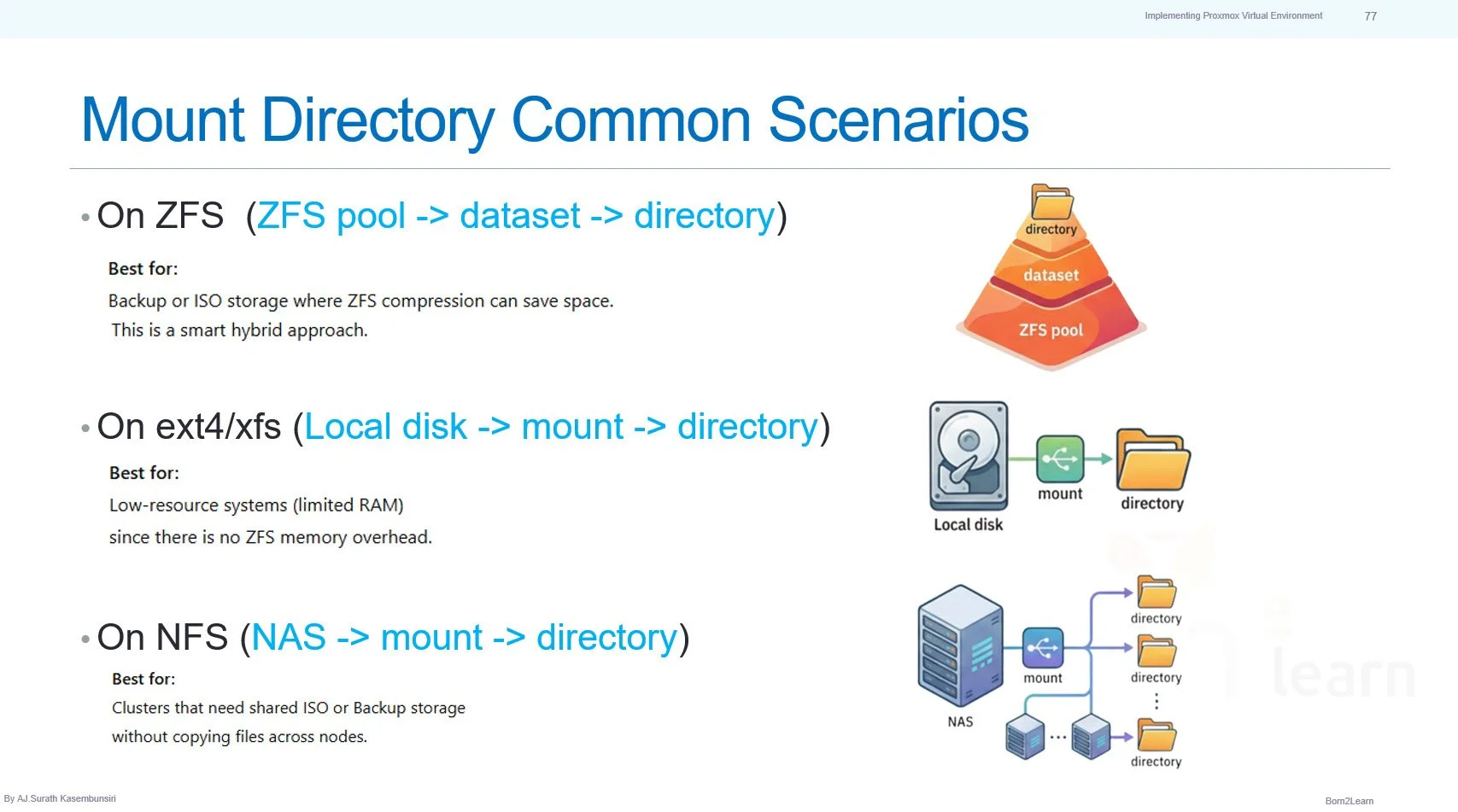
• Mount Directory Common Scenarios
• Share Storage with Fiber, NAS, SAN
• Add iSCSI SAN Storage to Proxmox VE
Module4: Virtual Machine & Container Management
• About Virtual Machines
vCPU and Memory
Virtual Disks
Virtual Network Adapter
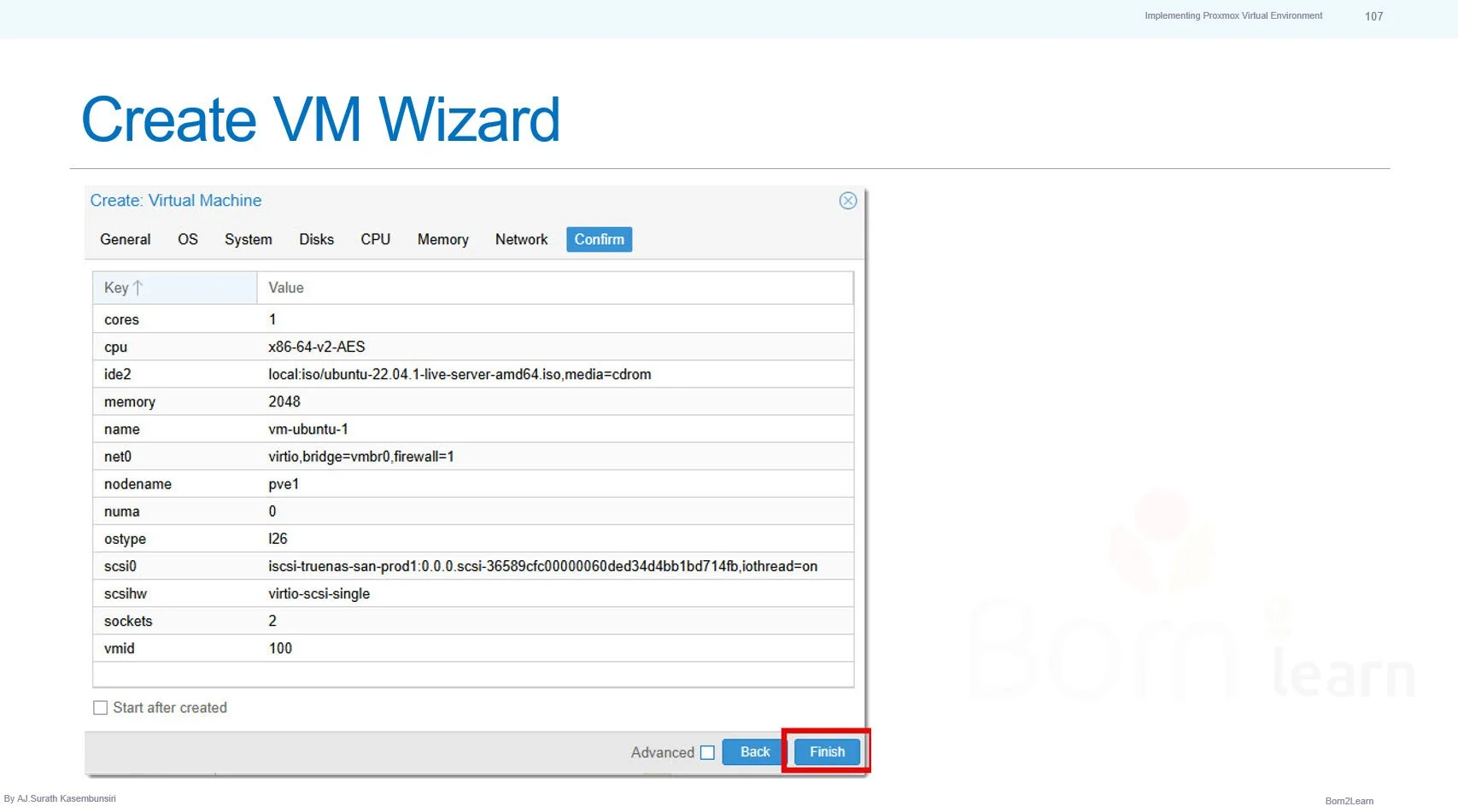
• Creating a Virtual Machine
• Installing Guest OS
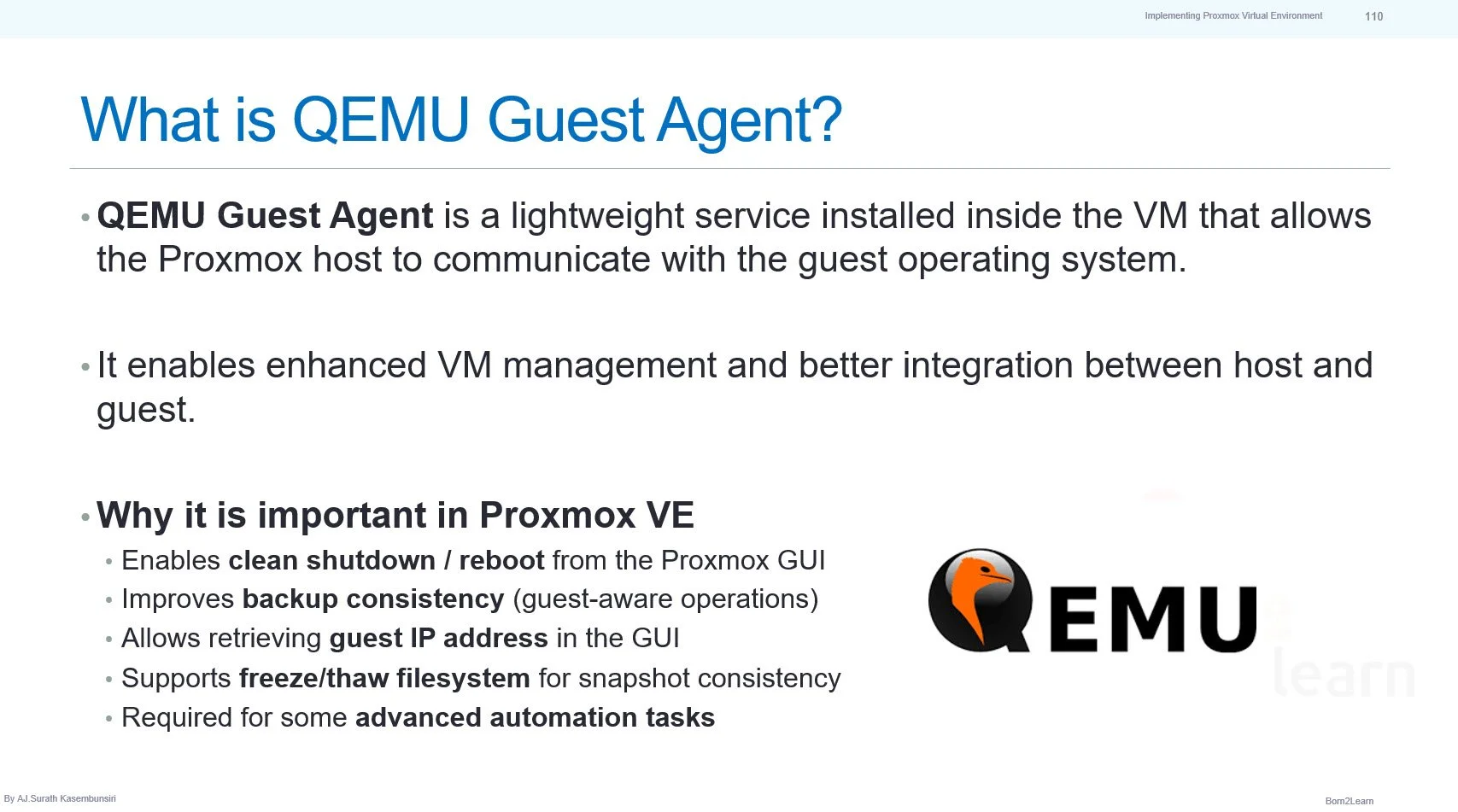
• About QEMU Guest Agent
• Installing QEMU Guest Agent
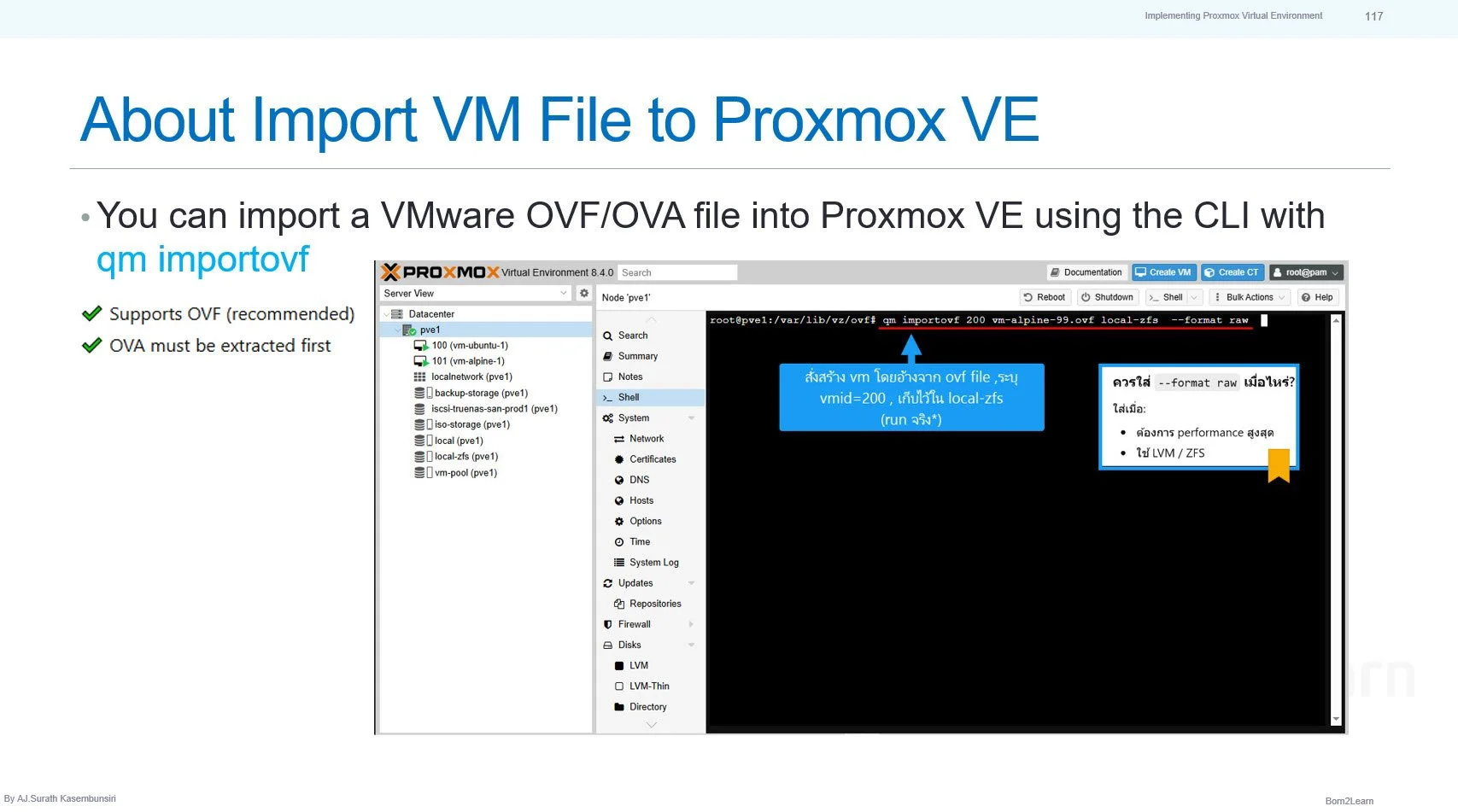
• Migrating VM from VMWare
Export File from VMWare
Important Precautions (Before Export VM)
Import File to Proxmox VE
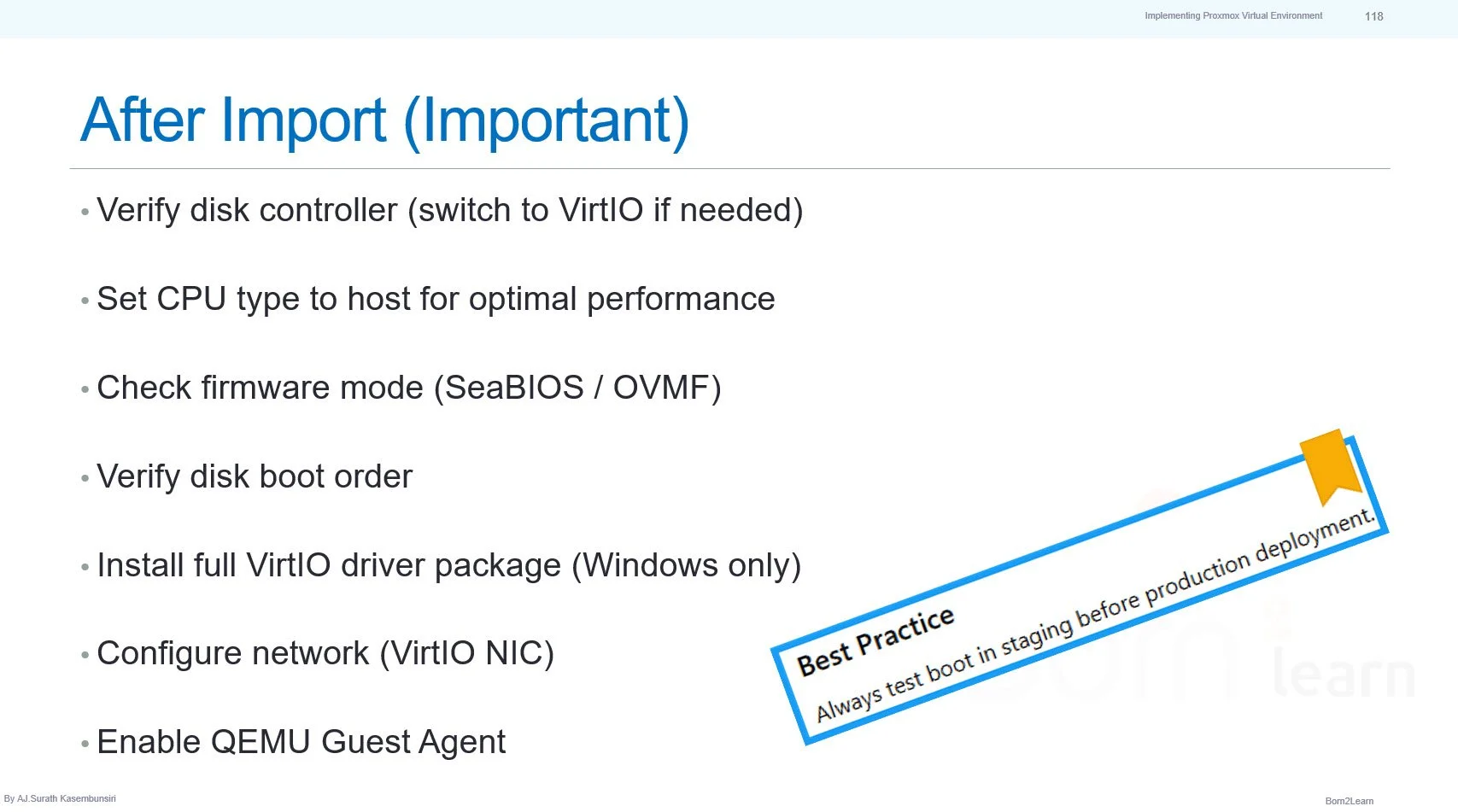
After Import Checklist
• Virtual Machine Content
VM Configuration File
VM Virtual Disk File
• Modifying Virtual Machine Settings
Add/Remove Virtual Hardware
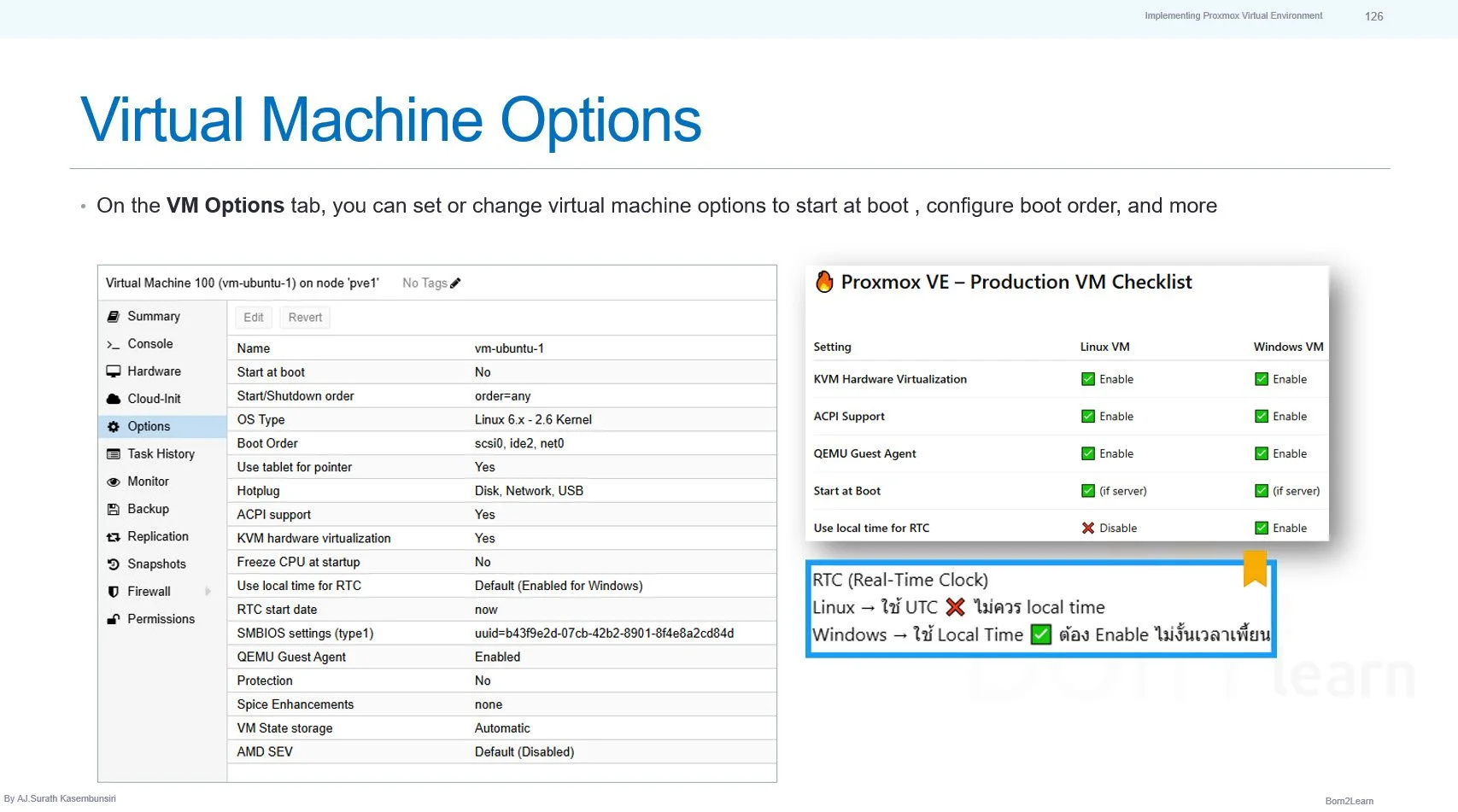
Set VM Options with Best Practices
• Remove Virtual Machine
• VM Templates and Clones
Full Clone vs Linked Clone
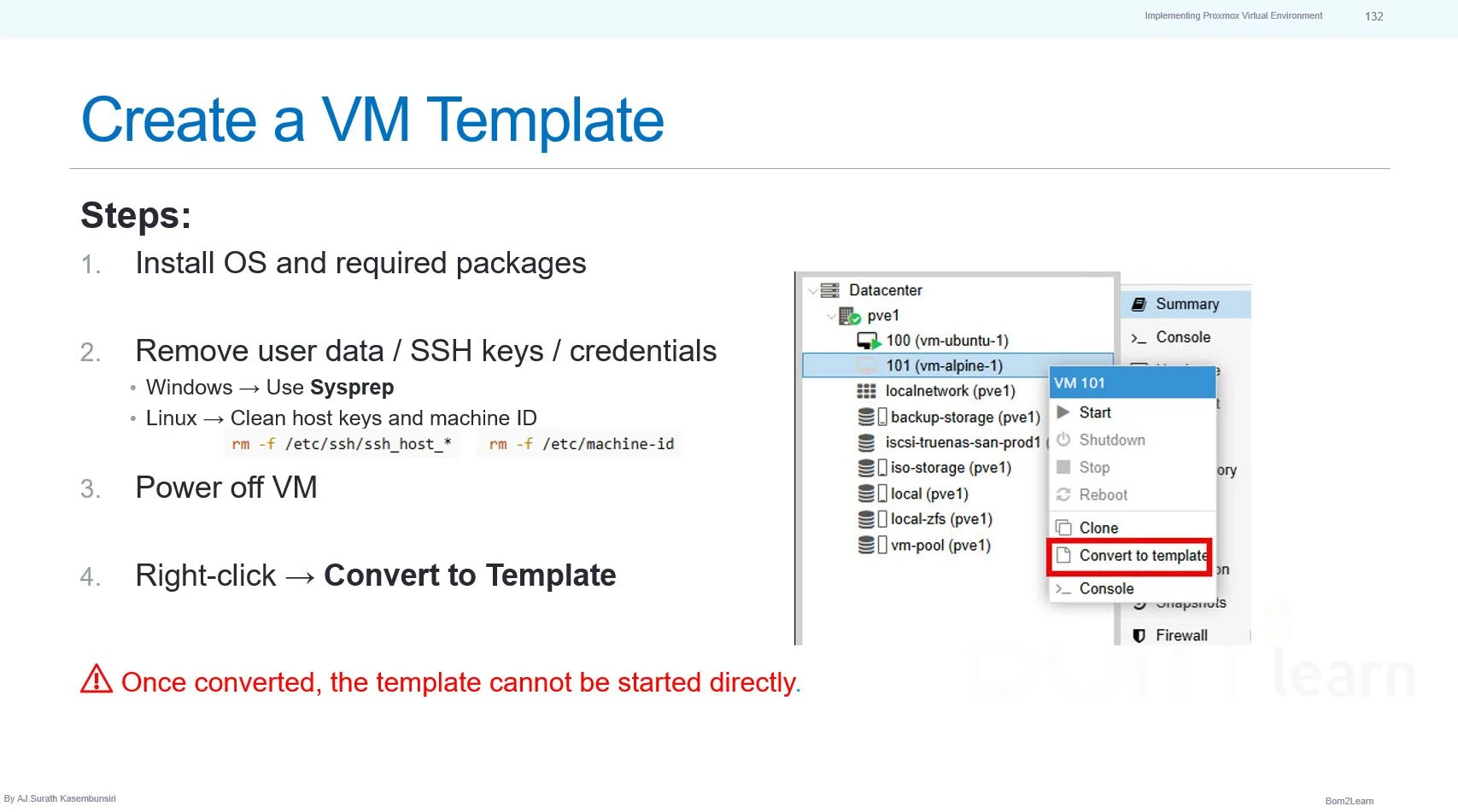
Creating a VM Template
Deploy VM from Template
• Creating a Linux Container (LXC)
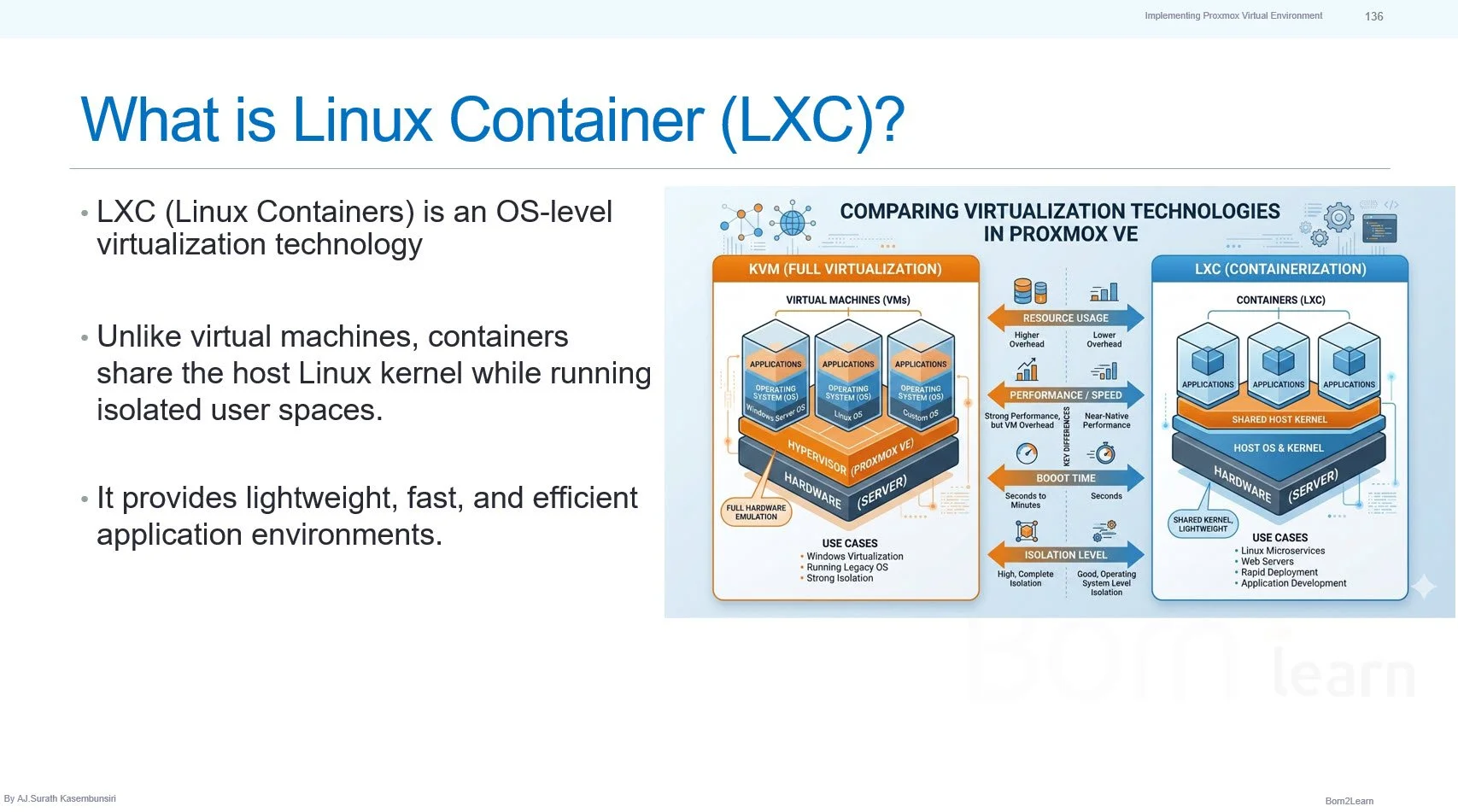
Advantages vs Disadvantages on LXC
About LXC Image
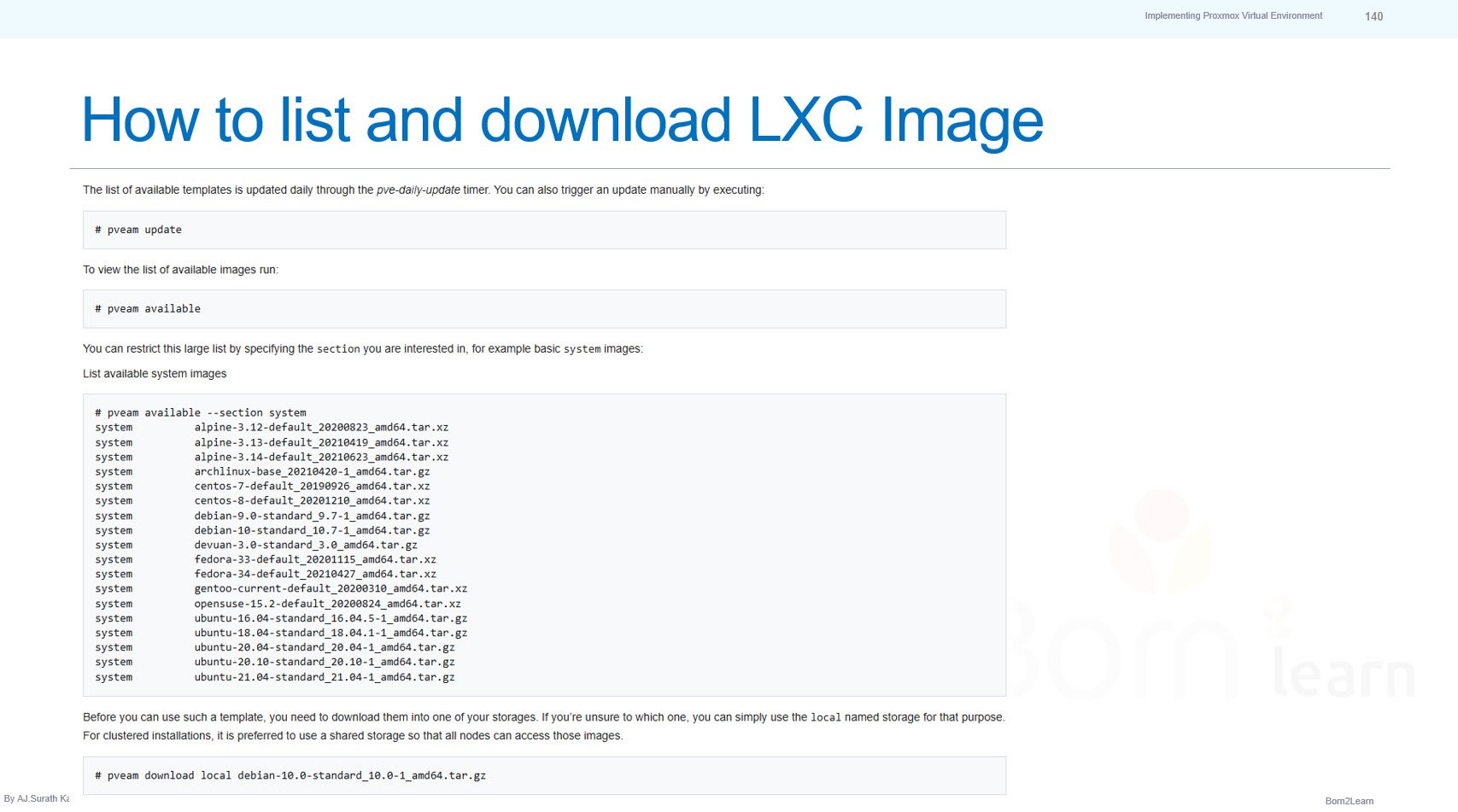
How to list and download LXC Image
Creating LXC from Image
Module5: Proxmox Cluster, HA & Replication
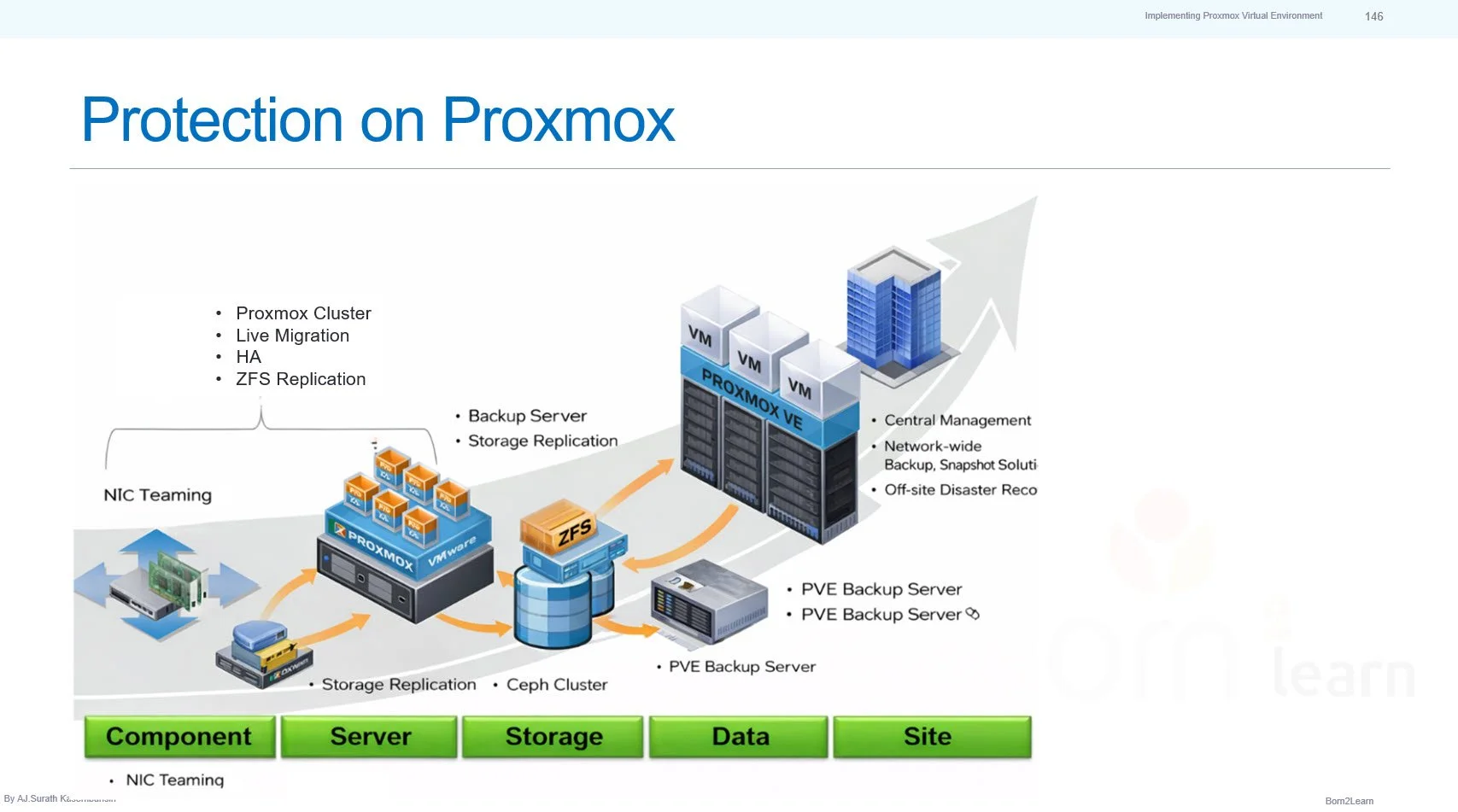
• Protection Overview on Proxmox
• Implementing Proxmox VE Cluster
Cluster Requirements
Preparing Nodes
Creating a Cluster
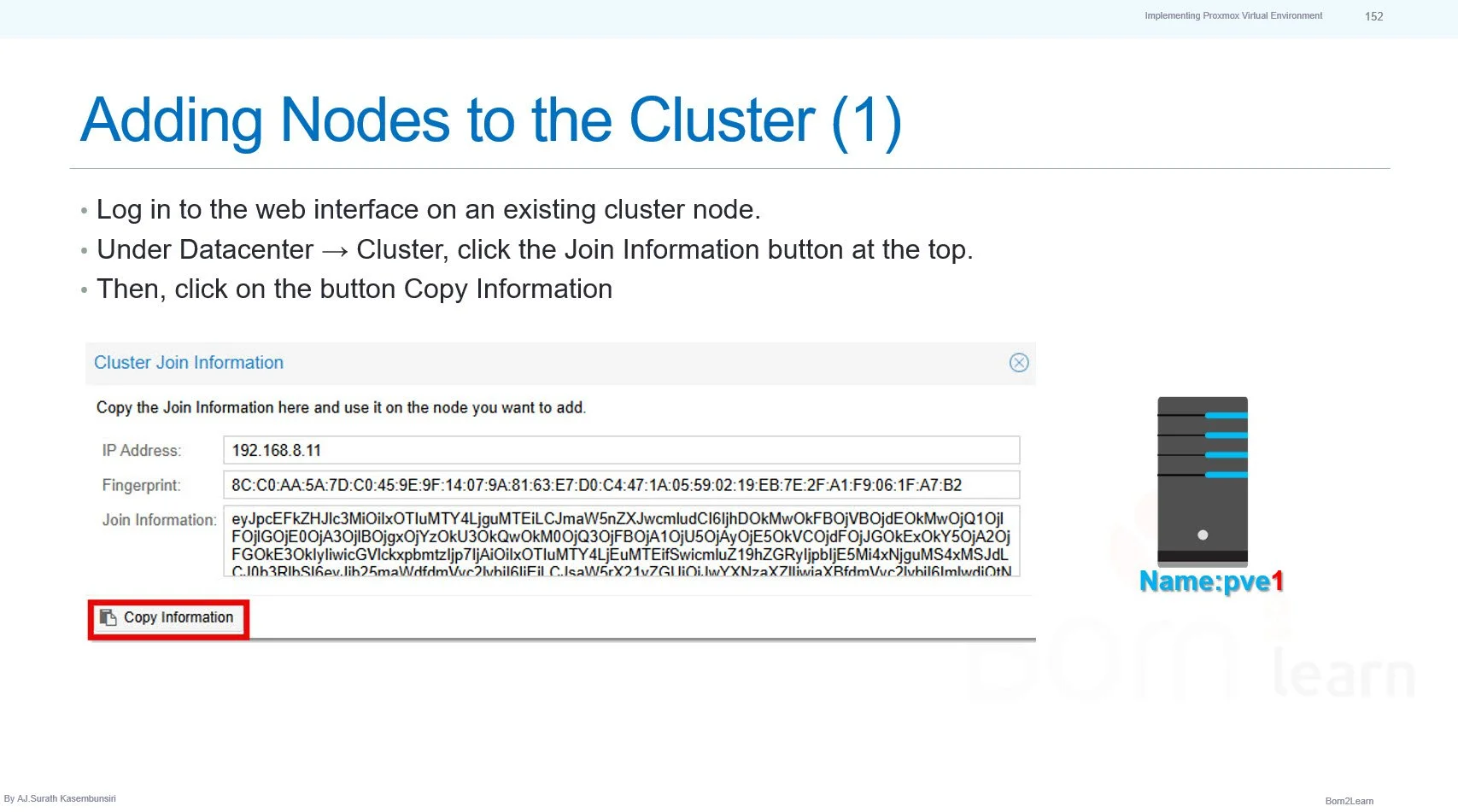
Adding Nodes to the Cluster
• Implementing Live Migration
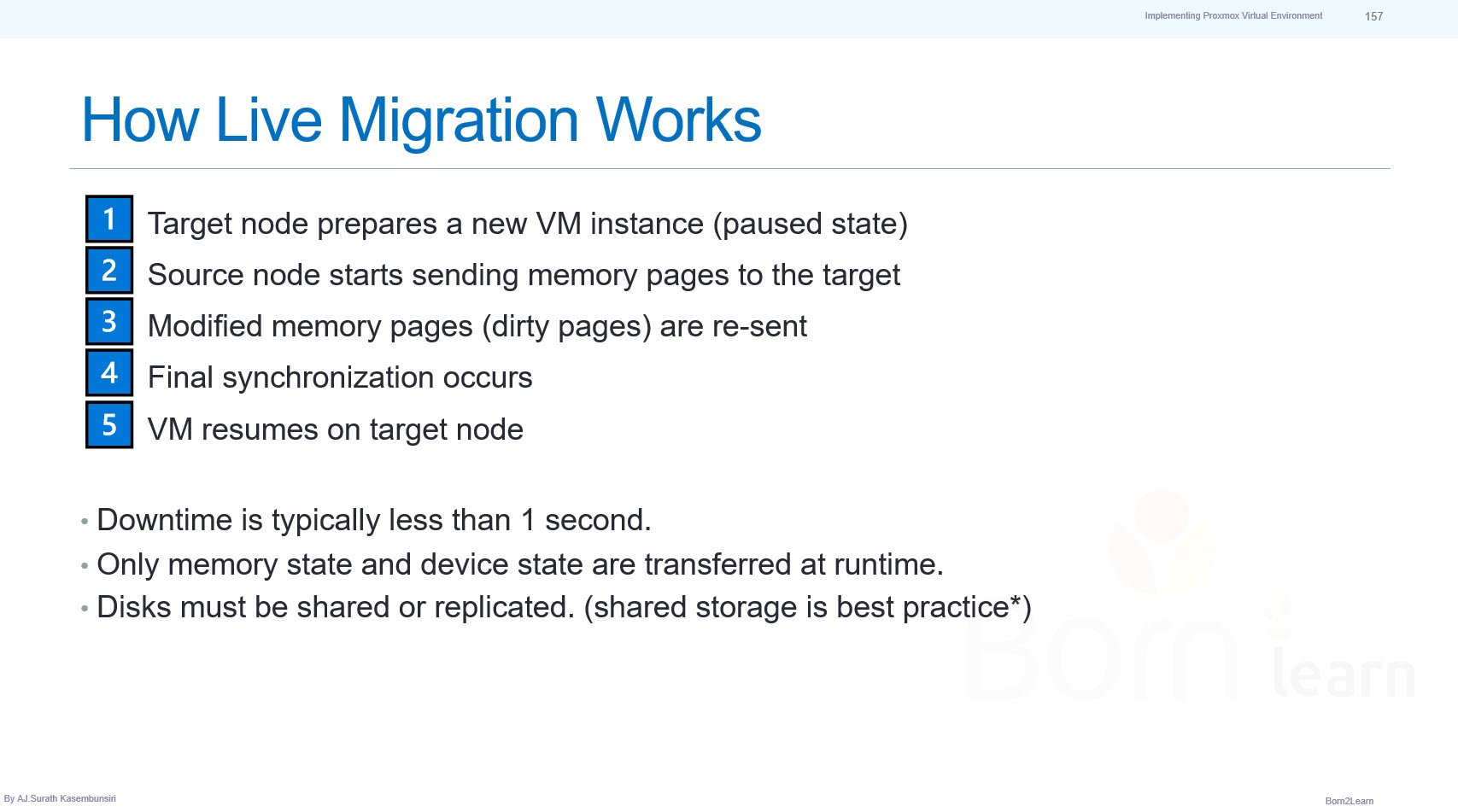
How Live Migration Works
Requirements for Live Migration
About Migration Network and Design
Performing Live Migration
• Implementing High Availability (HA)
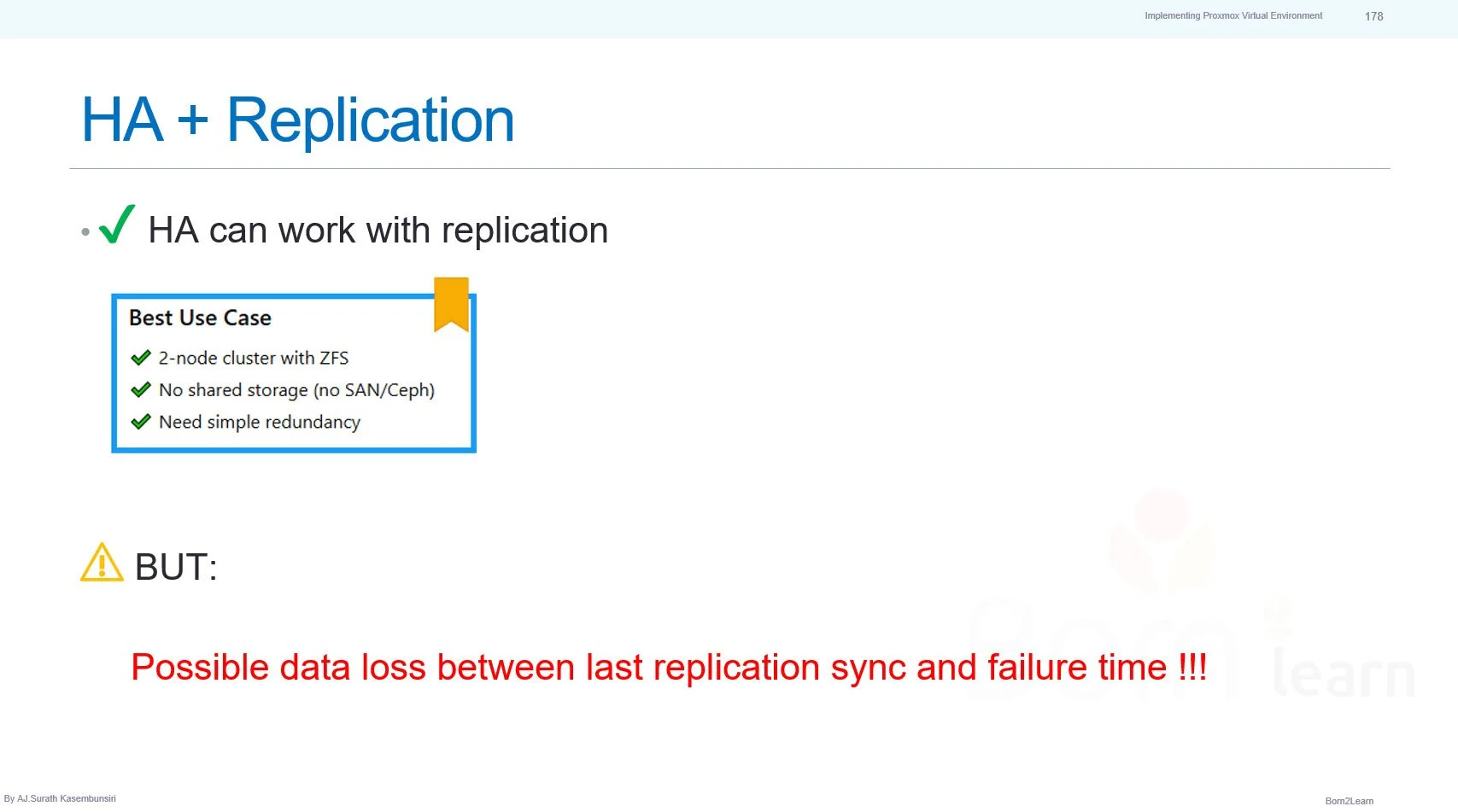
How HA Works in Proxmox VE
Requirements for HA
Corosync Architecture
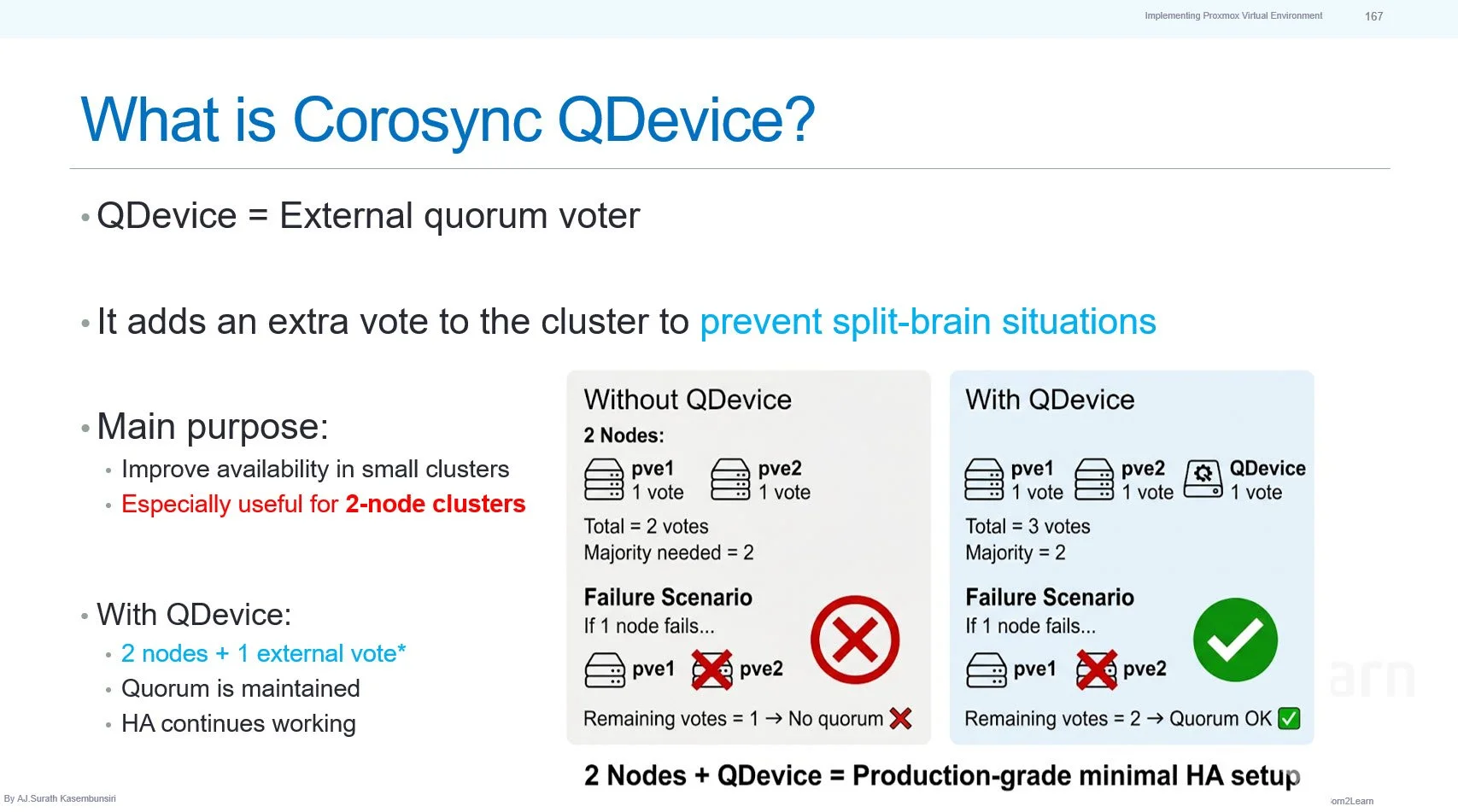
Quorum Concept
Split Brain Problem
About Corosync QDevice
QDevice Setup
Adding QDevice to Cluster
Enabling HA on VM
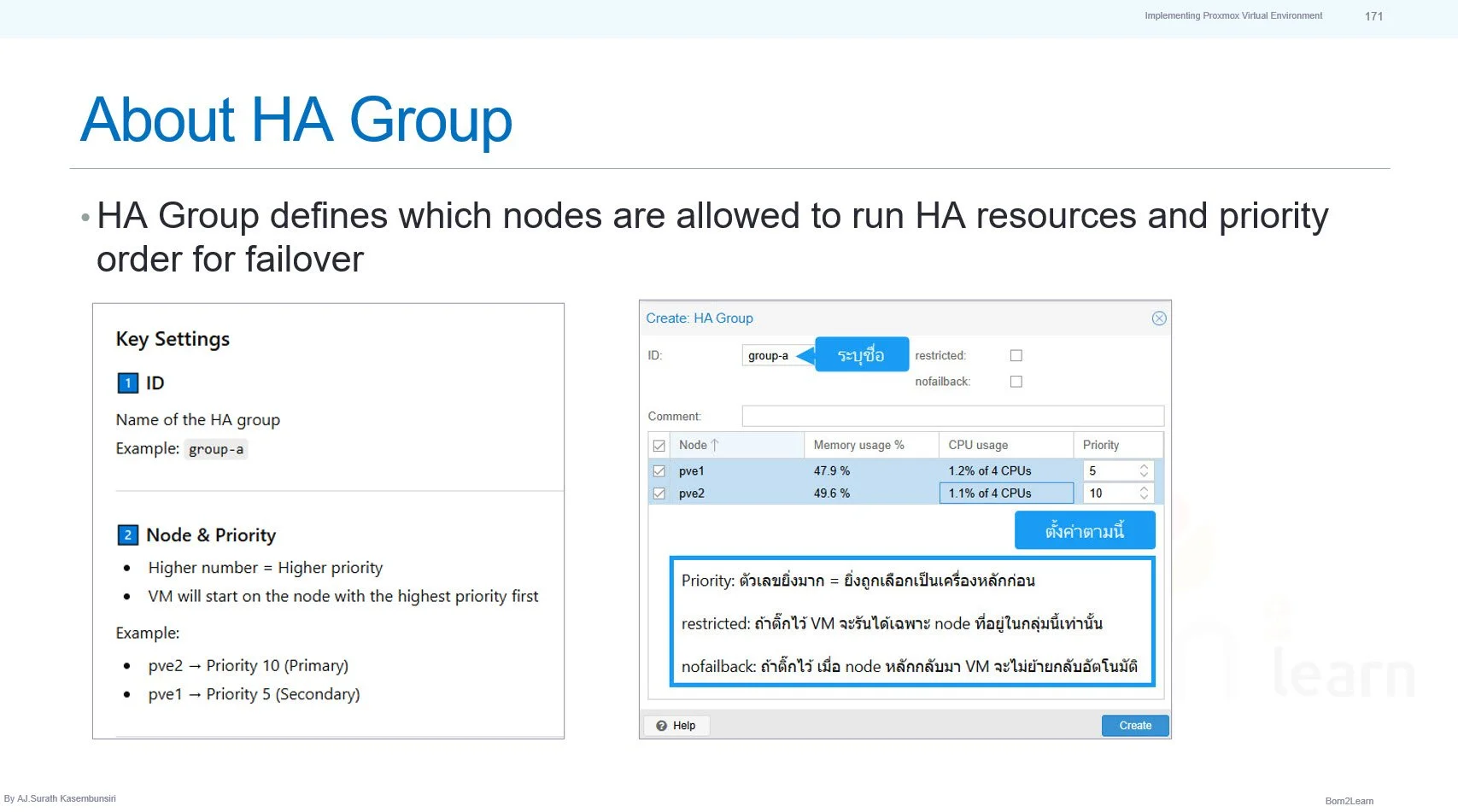
Creating HA Group for failback
Test HA with Automatic Failover
Test HA with Automatic Failback
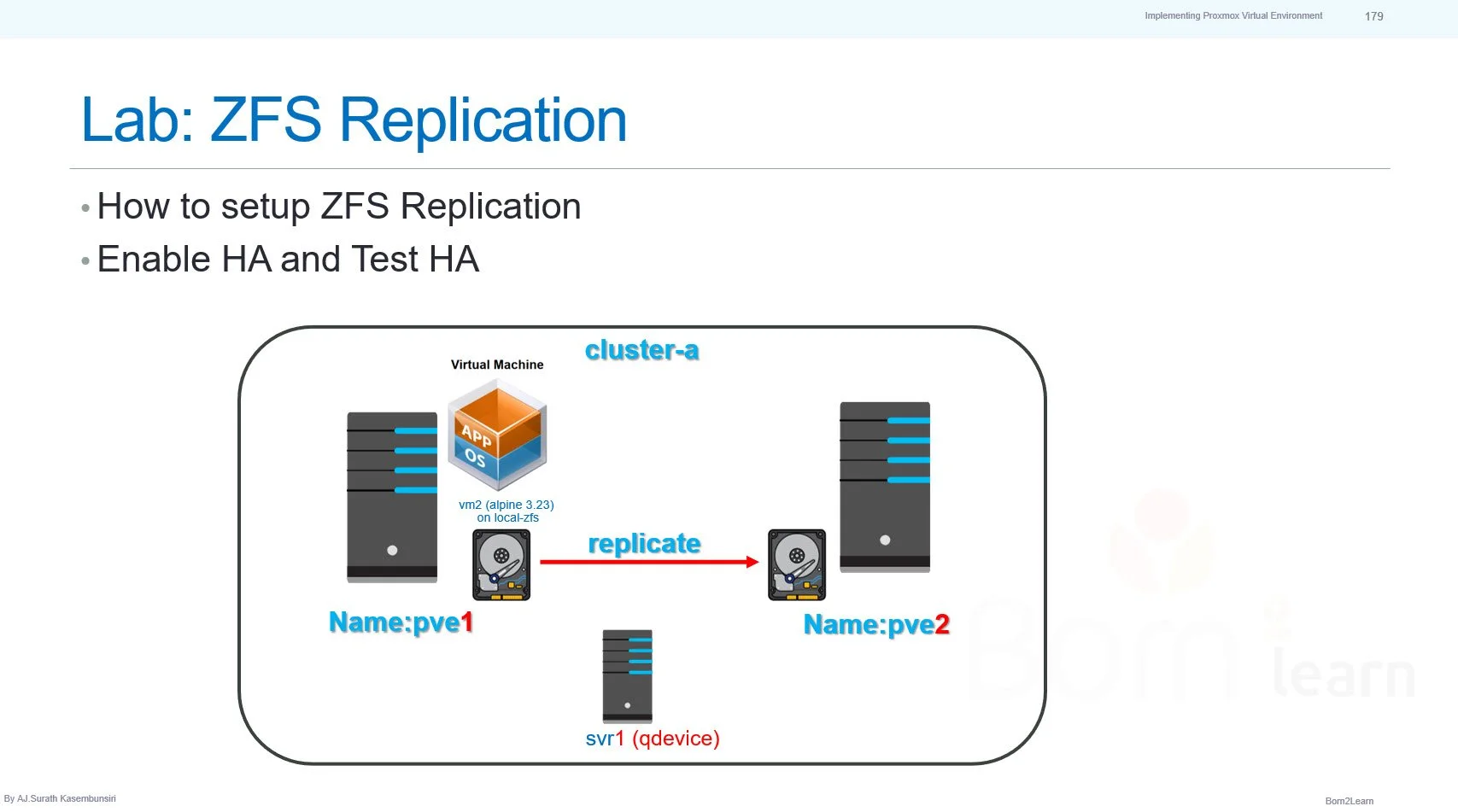
• Implementing ZFS (Storage) Replication
Concept About ZFS Replication
Process of ZFS Replication
Migration Behavior
Creating ZFS Replication
Integrating HA on ZFS Replication
Module6: Proxmox Backup & Data Protection
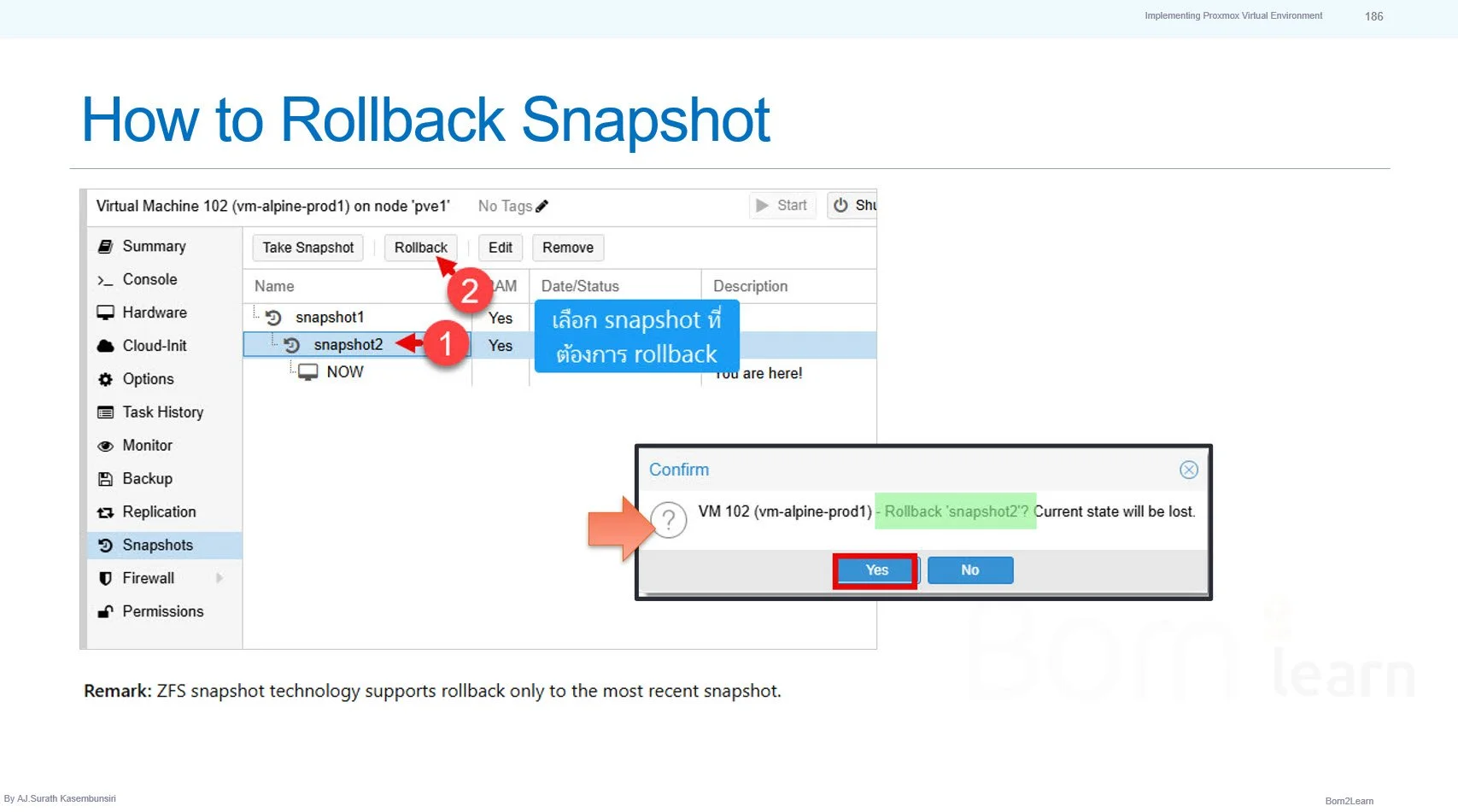
• Virtual Machine (Live) Snapshot
Requirement for VM Snapshot
Take a Snapshot on VM
Rollback a Snapshot on VM
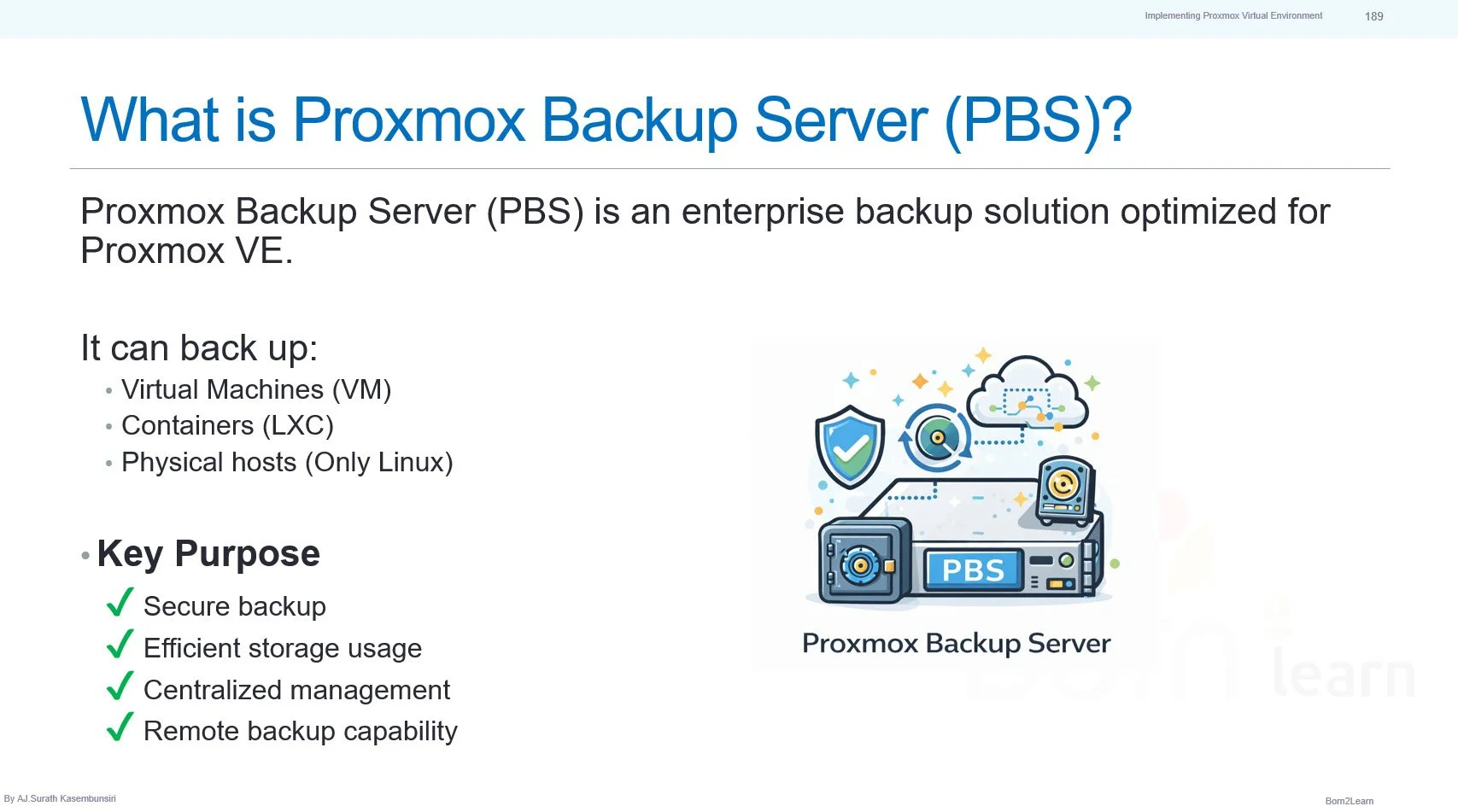
• Implementing Proxmox Backup Server (PBS)
What is PBS?
How PBS Works
PBS System Requirements
Installing PBS
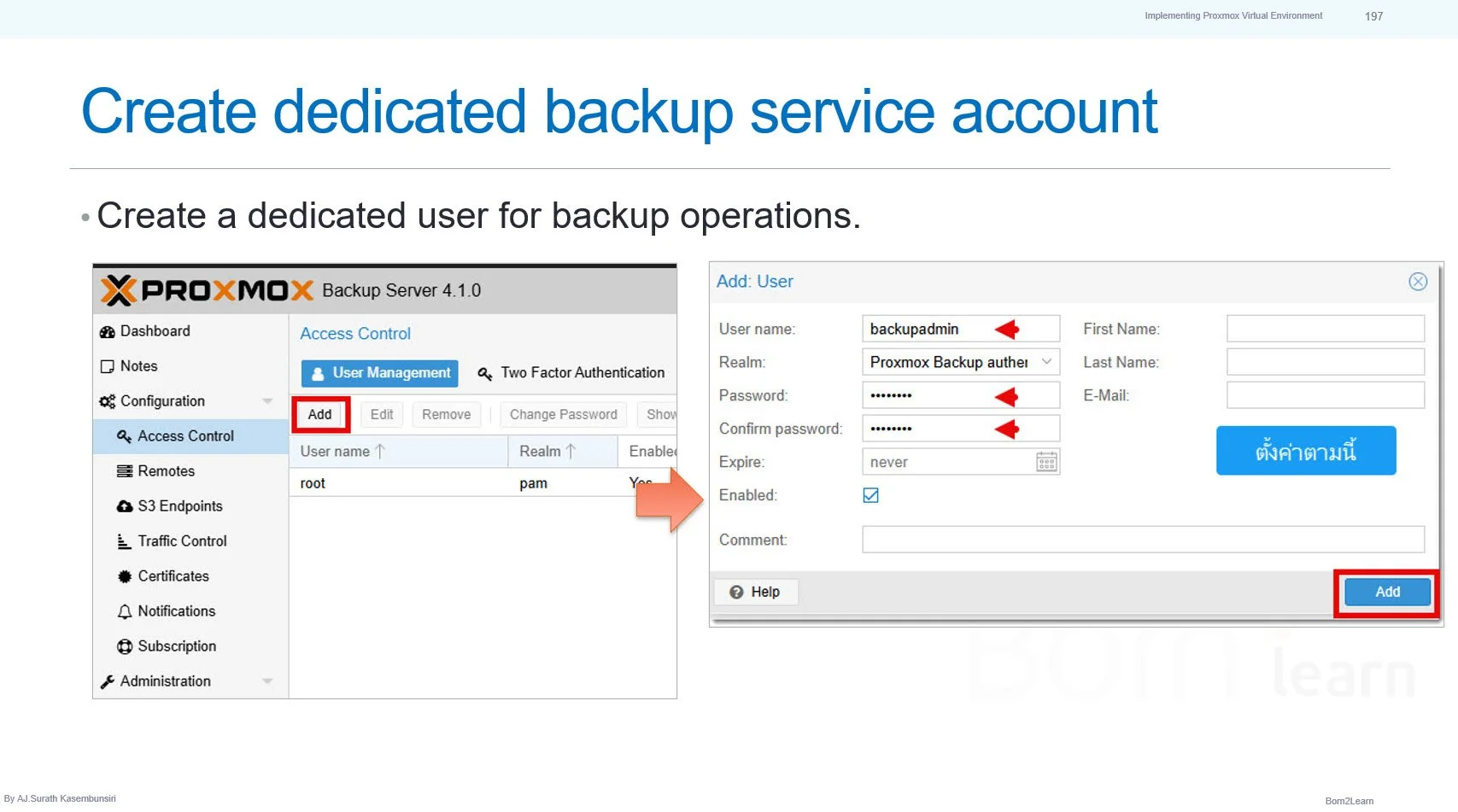
Configuring PBS
Integrating PBS on Proxmox VE
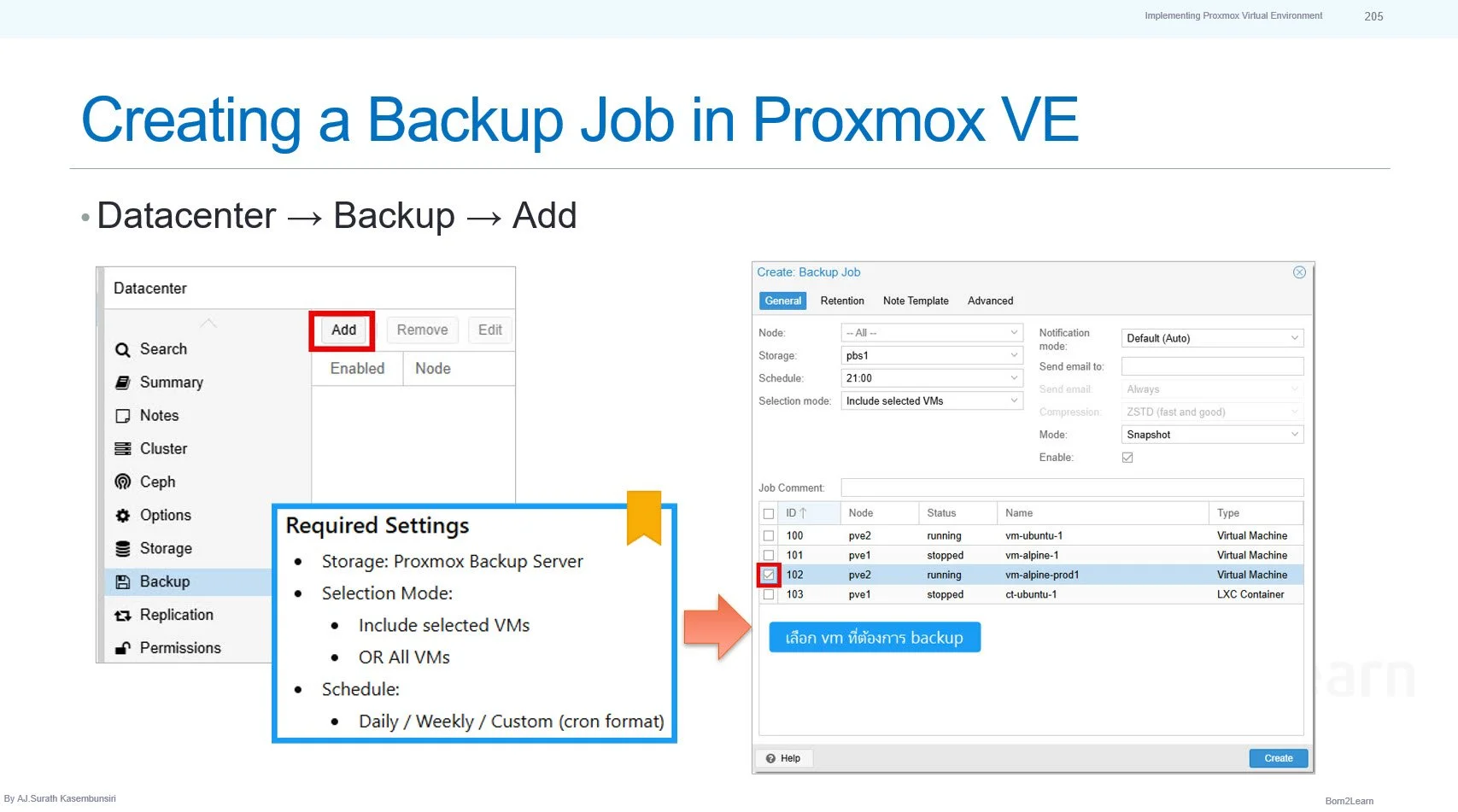
Creating VM Backup Job with Best Practices
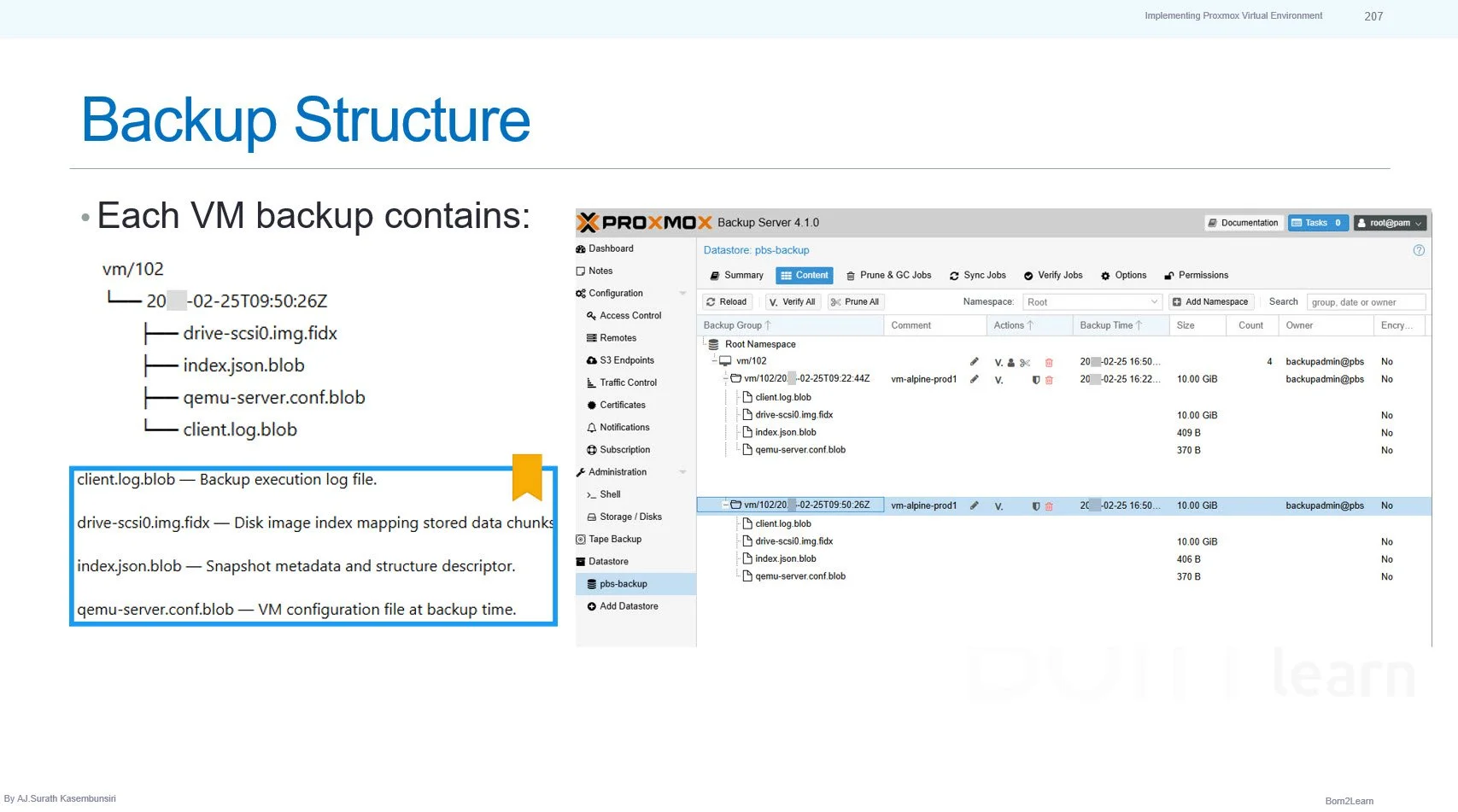
Backup Structure File
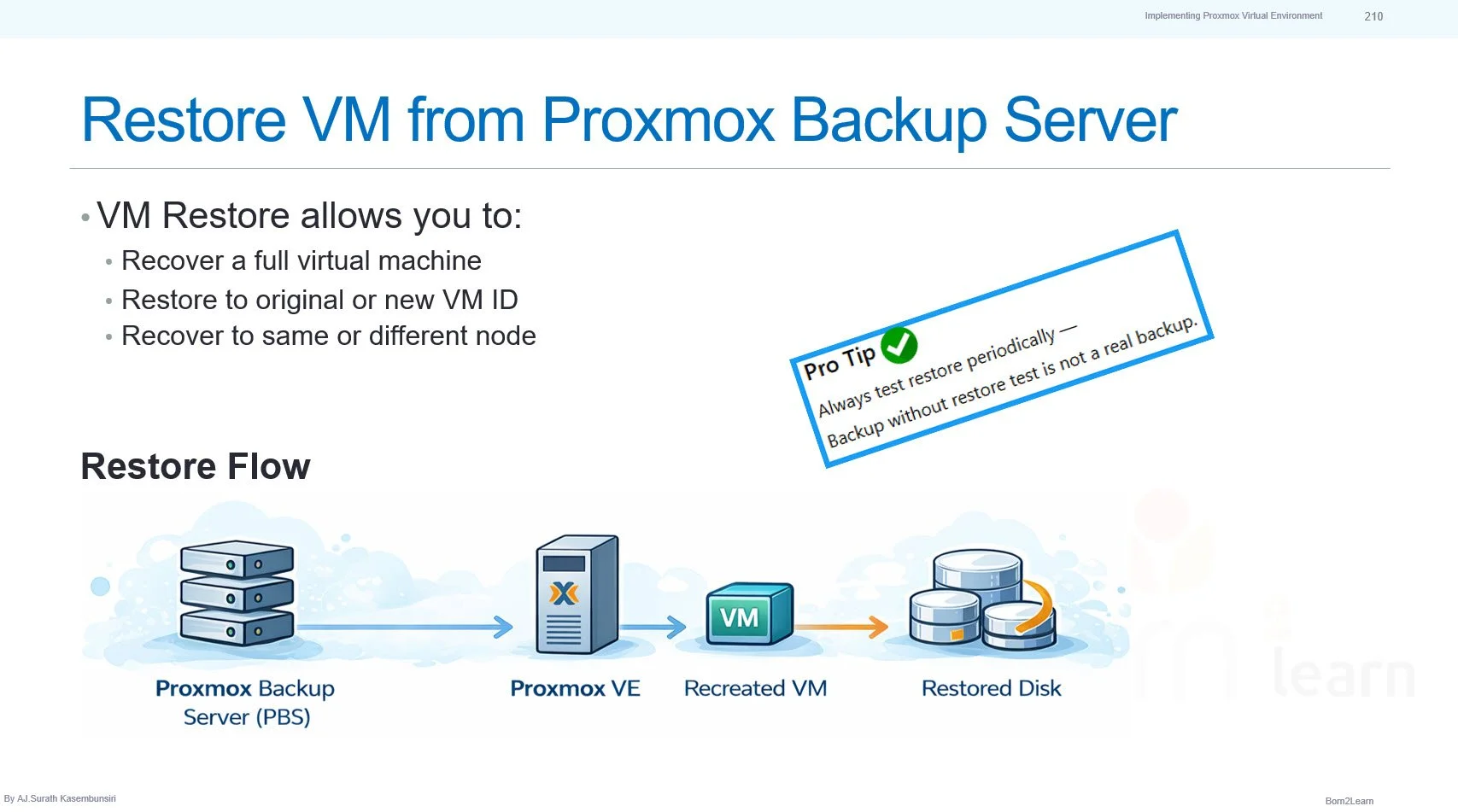
Restoring VM from PBS
• Performing Backup Configuration on PVE Host
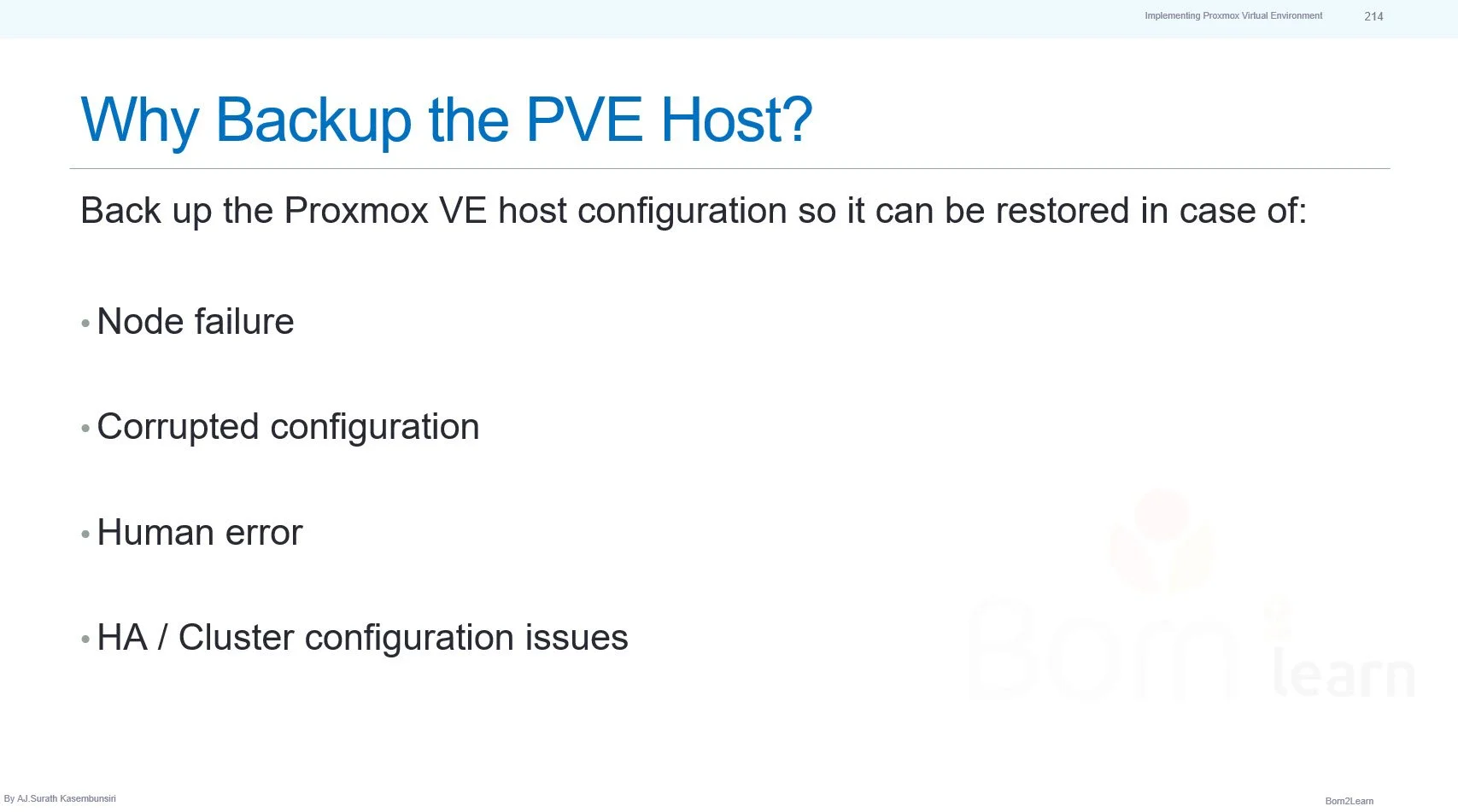
Why Backup the PVE Host?
What to Backup (critical configuration files on PVE Host)
Performing Backup Configuration on PVE Host
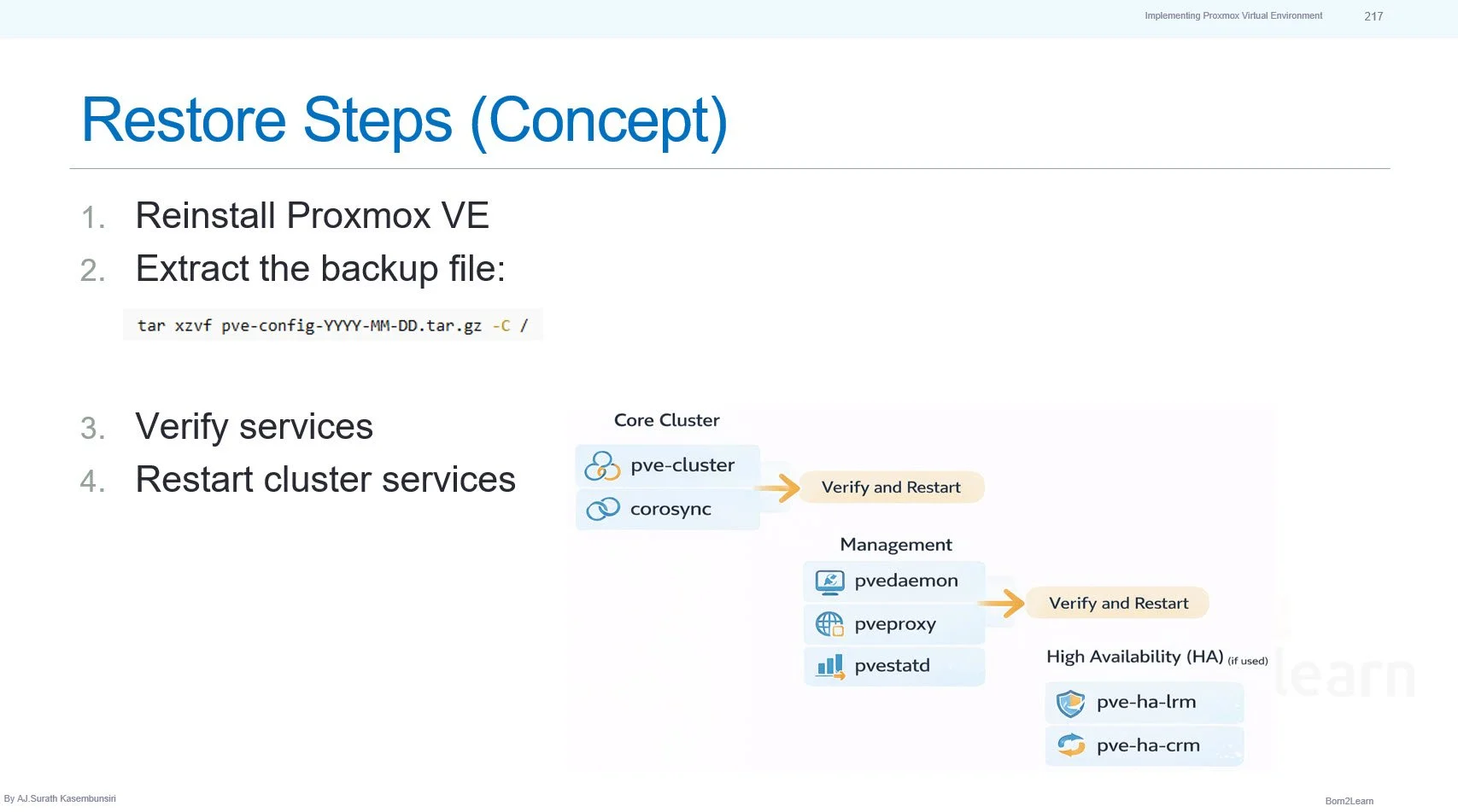
How to restore PVE Host